

Cathy Vass
Green Zebra Business Solutions


Referrals built your firm. They also decide when it grows.
Right now business owners are searching Google for an accountant and your firm isn’t on the first page. The ones who ask ChatGPT instead get three names back, and yours isn’t one of them. We change that.

A client mentions you to their supplier. Someone remembers your name at a networking breakfast. Eight months later the phone rings.
Referrals built your firm and they still work. That isn’t the problem. The problem is that nobody in the partner round can say where next quarter’s fee income is coming from, because the answer depends on whether somebody else happens to mention you.
Search works differently. Prospective clients arrive because they went looking for an accountant, not because someone remembered your name at the right moment.
Your old SEO agency got you found for questions, not for hiring. Tax questions. Deadline questions. Rules questions. Organic traffic climbed every month and the report looked great.
Nobody typing those is hiring an accountant. They’re doing their own return.
That’s where most SEO strategies for accounting firms fall down. Easy keywords that fill a report, instead of the ones a director types the week they’ve had enough of their current firm. Keyword research isn’t a list of terms with search volume next to them. It’s the difference between organic traffic and a signed engagement letter.
The switch is predictable. It happens after a late filing, after the fee letter, after a call that never got returned. Or a business incorporates and needs someone for the first time.
They Google it that week. “Accountant for limited company.” “Tax planning for company directors.” “Accountants near me.” They look at the first three search results and the Google map results. They check the reviews. They enquire.
Professional clearance lands on the old firm’s desk a fortnight later. That firm finds out last. The firms that were never in the search results never knew the decision was happening at all.
“Who’s the best accountant for a limited company director in the South West?” “I need an accountant for a contractor business, who should I use?” “Which accountancy firms are good at tax planning for owner-managed businesses?”
ChatGPT names three firms. Google’s AI Overviews names three firms. Increasingly they name the same three, and the business owner never reaches a search engine results page at all.
Most accounting firms have never checked whether they’re in that answer. The SEO agencies running their accounts haven’t either. AI search engines pull recommendations from the firms whose content and online visibility make them easy to trust, which means the firms getting named now will still be getting named in five years.
The shortlist gets made in the search results and on your website, long before anyone picks up the phone.
Your firm is either in that answer or it isn’t, and most accountancy firms have never checked.
It’s called Your Money or Your Life content, and E-E-A-T means Google is looking for proof a real expert wrote it. That’s the bit a generalist agency can’t get past.
Answer 15 questions to see how well your firm is really using AI and marketing, and what to fix first.
It takes three minutes; you get immediate recommendations plus free assets matched to your results.
Five things have to happen for your firm to win the search. They only work when they’re done together.

Most SEO agencies rank accounting firms for whatever’s easiest to win. Long informational keywords. The firm’s own name. Vague terms with search volume and no buyer behind them.
Your prospective clients don’t type those when they’re ready to move. They type “accountant for limited company directors”, “R&D tax credit specialist”, “tax planning for company directors”. Bottom of the funnel, commercial intent, the day they’re ready to make the call.
Our keyword research maps every term to whether the person typing it is researching, comparing or buying, then builds your service pages around the ones that convert. Every keyword is tied to your specialisms, your accounting services and the clients you actually want more of.
More organic traffic is easy. More of the right potential clients is the job.
When a director asks ChatGPT, Claude, Perplexity or Google’s AI to recommend an accountant, the answer names three firms. Most accounting firms aren’t in it, because the SEO agencies running their accounts haven’t started thinking about AI search yet.
We have. Every engagement optimises for the traditional search engines and the AI ones together. Same content, structured with schema markup so both can read it and both can trust it.
Financial content is held to the strictest standards on the internet, and AI search engines pull their recommendations from the firms that visibly meet those standards. Get it right early and your firm gets named when prospective clients ask. Leave it and your competitors take the recommendation slots on Google AI Overviews and ChatGPT for the next five years.
Most accountancy firms win their clients close to home, even the cloud-first ones. A business owner handing over their books wants to know they could sit across a table from you if it came to it.
Which is why local SEO is the fastest win available to an accountancy firm. Someone running local searches for “accountants near me” is a buyer, not a browser.
We optimise your Google Business Profile, build the citations that prove your firm exists where it says it does and target the local searches that bring local clients in. Location pages for the areas you serve. Reviews requested properly instead of hoped for. Local SEO strategies that put your firm in the map pack, not just on page one.
Every enquiry arrives with a postcode attached, so the impact is easy to see. For accounting firms with an office, local visibility usually delivers leads inside the first 60 days.
Google classifies financial content as Your Money or Your Life, which means the bar for ranking is higher than almost any other industry. Every page has to satisfy E-E-A-T: experience, expertise, authoritativeness and trustworthiness.
In practice that means content written by someone who knows the difference between a director’s loan account and a dividend. Copy a partner signs off first time instead of correcting, because content stuck in review for six weeks changes nothing on your accounting firm’s website and nothing in the search results.
Then the high quality backlinks. Ours come from accountancy and advisory publications, not a generic guest post network, so a link means something to the search engines and to the people reading it. Internal links tie your service pages together so authority flows to the ones that earn fee income.
Fast loading. Works on a phone. Core Web Vitals passing. An XML sitemap the search engines can actually crawl.
Page speed and site security are trust signals for buyers and for search engines, and Google holds financial websites to a higher bar than almost anything else on the internet. Most agencies skip technical SEO because clients can’t see it.
We run a full technical SEO audit at the start of every engagement, fix what’s broken, rewrite the meta descriptions costing you clicks, and track the lot through Google Search Console and Google Analytics so you can see exactly what changed and when. If the site itself is the problem, our website design for accountants team sits in the same room.

£30,948 a year in new business & rank 1 on Google for London’s toughest bookkeeping terms.

We took a brand-new US insurance company from no website to page one of Google in six weeks.

An accounting firm nowhere on Google. Under a year later, number one in Hampshire.

Three things make us different from every other SEO agency you’ve spoken to.
Most SEO agencies bury the truth in a twenty-page dashboard full of impressions, organic traffic and domain authority scores. None of it tells you whether search engine optimisation made your firm any money. Our monthly reports show three things: the search terms we’re ranking your firm for, the qualified organic traffic those rankings bring in, and the leads they turn into. Numbers you could put in front of the partners without translating them first.
Most agencies treat traditional SEO, AI search and local SEO as three different services. You pay three retainers, or one happens and the other two don’t. We run all of it together. Same team, same strategy, same reporting. Every engagement covers Google, ChatGPT, Google AI Overviews, the map pack and local search results, so your firm shows up wherever prospective clients are looking.
Backlinks are still the biggest off-page factor in search rankings. Most agencies build them through generic guest post networks with nothing to do with accountancy, which is why the links never move anything. Our partner network covers accountancy, advisory, brokerage and bookkeeping publications across the UK, Europe and the US. Available as an add-on to every SEO strategy.
Quarterly catch-ups, dinners, beers, pool nights, coffees, darts, football, rugby and cricket.
We put real time into the financial services firms we work with because the work’s better when the relationship is. Most financial firms get treated like a contract by their SEO agency. The accounts that compound for us are the ones that run as partnerships with finance businesses, not contracts.

Free SEO audits, keyword strategy frameworks, on-page SEO checklists, technical SEO templates, core web vitals guides, title tags worksheets and content strategy resources you can download and start using today.
Built for accountants, bookkeepers, financial advisors and insurance brokers who want to implement effective SEO strategies before they bring an agency in. Genuine resources for finance companies ready to improve search rankings, win local visibility and bring qualified traffic to their financial websites.
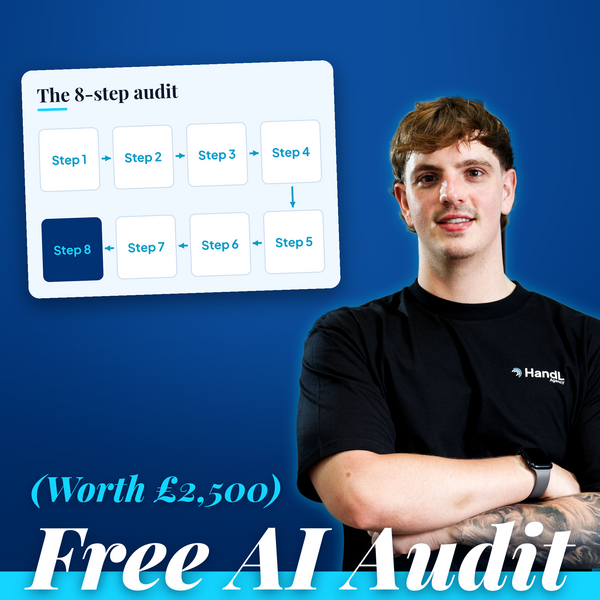






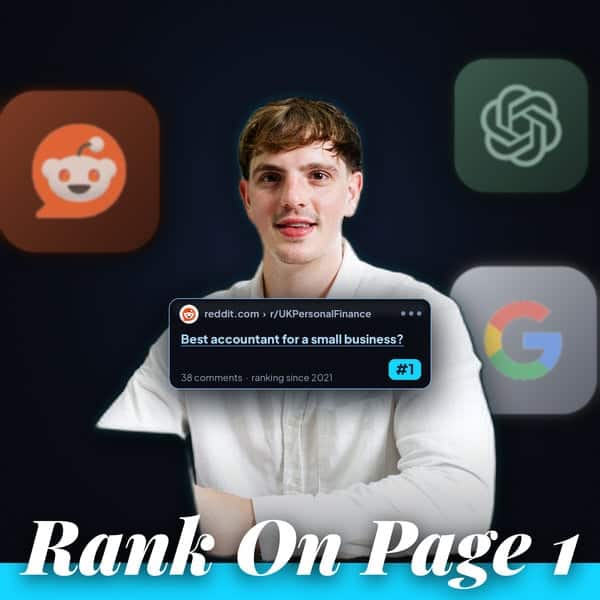



In 45 minutes with Bailey and Luke, you’ll see where your firm is losing search visibility, what the accountancy firms outranking you are doing differently, and the two or three changes that would make the biggest difference to your search results in the next 90 days.
Whether the answer is local SEO, technical SEO, content or AI search, you’ll leave with a clearer picture than you walked in with.
Jump on a call with Luke and Bailey today.
Not ready to book a call? Take the 3 minute AI scorecard first.
Or call us on 0117 457 6659, email contact@handlagency.com, drop us a message on WhatsApp or fill in the contact form.
Six to twelve months for meaningful results, and anyone promising faster is selling you something. It usually arrives in an order. Local searches move first, often inside 60 days, because the map pack is the least competitive thing you’ll compete for. Service page rankings follow at three to six months. Authority from content and links compounds after that. You’ll see movement in Google Search Console long before you see it in the diary, which is why we report on leads rather than impressions.
Yes, and it’s usually the fastest win available. Even firms serving clients nationally get most enquiries from a radius, because a business owner handing over their books wants to know they could sit across a table from you if it came to it. Local SEO puts your firm in the map pack for local searches, where national accountancy firms rarely compete. Get your Google Business Profile right, request reviews properly instead of hoping for them, and the local business enquiries start arriving with a postcode attached.
By choosing what you rank for. A firm that ranks for “tax return help” gets sole traders. A firm that ranks for “tax planning for company directors” gets retainers. Same keyword research process, different target audience. We map every term to who’s typing it and why, build your service pages around the searches your right clients run, and leave the rest alone. You’ll get fewer enquiries. More of them will be worth answering.
Every core service, yes. One page trying to cover tax planning, payroll, audit and R&D will rank for none of them, because the search engines can’t tell what it’s about and neither can the reader. Each of your accounting services needs its own page, built around the searches for that service and tied together with internal links so authority flows between them. Specialist services are usually where the fees are and where the competition is thinnest, so those web pages earn their keep fastest.
No. We write it, a partner reviews it for accuracy. That’s the only part we can’t do without you, because website content about tax has to be right and only your team can sign that off. What you won’t get is keyword stuffing or another blog post about Making Tax Digital that says nothing. Content marketing works for accountancy firms when the content is worth a prospective client’s time, and it keeps working for years after it goes live.
They do different jobs. Paid advertising brings enquiries this week and stops the day you stop paying. Organic search takes longer and keeps going. Most marketing strategies for accounting firms use both, with ads covering the gap while SEO builds. If you can only fund one, organic search is the better bet for a firm with a long client lifetime, because you’re buying an asset instead of renting attention. Just don’t expect it in month one.
Ask for three things. Google Search Console access, so you can see the searches you’re showing up for and your real keyword rankings. Google Analytics access, so you can see what organic traffic does once it lands. And the list of terms they’re targeting. If those terms are questions rather than hiring intent, you have your answer. Both tools are free, the accounts should be in your name already, and an agency reluctant to hand them over is telling you something.
Google gives ten results and lets the reader choose. AI search engines give three names and a reason. The work overlaps but it isn’t the same. Traditional SEO for accountants gets you into the results. Getting named in Google AI Overviews or ChatGPT needs content structured so a machine can lift a clean answer out of it, schema markup and structured data so it knows what your firm is, and enough corroboration elsewhere that it trusts the answer. Do both. They feed each other.
Usually, yes. Google indexes the mobile version of your accounting website first, so if it’s awkward on a phone it’s awkward for the search engines. Core Web Vitals are confirmed ranking factors, which in plain terms means page speed and how the page behaves while it loads. HTTPS matters more for financial websites than most, because you’re asking small businesses to hand over their books.
None of that wins you rankings on its own. It’s the floor. Fix the technical performance first and on page optimisation starts working. Skip it and you’re publishing good content onto a site that can’t carry it. We check all of it in the free SEO audit before we quote, because there’s no point selling you content if the foundations won’t hold it.
More than most agencies would like you to know. Google Keyword Planner and Google Search Console are free tools and they’ll tell you what your firm already ranks for and what people type before they land. Start there.
Then the basics: put the target keyword in your page titles and meta descriptions, give each core service its own page instead of one page covering everything, and claim your Google Business Profile properly. Write one genuinely useful article for the clients you want and see what it does. Educational content works for accountancy firms because business owners research a financial decision before they make it, and the firm that answered the question is the firm they call.
Do that and your SEO efforts will already be ahead of most firms. Our free library has the checklists and templates if you want them. You don’t need us to start.