

Cathy Vass
Green Zebra Business Solutions


If you’re looking into SEO for bookkeepers, word of mouth has probably gone quiet again. Referrals built your practice. They also decide when it grows.
Right now a sole trader is searching for help with Making Tax Digital, and a company director is looking for someone to take the bank feeds off their hands. They’re choosing from the bookkeepers on the first page of the search results, or the three names ChatGPT gives back. We make sure yours is one of them.

A client mentions you at the school gate. An accountancy practice passes over a client whose books are a mess. Six months later, another one turns up.
That work is good work and it isn’t going anywhere. The trouble is you can’t plan around it. When the accountant who sends you three clients a year retires or hires an in-house bookkeeper, part of your pipeline goes with them, and nothing you do in March changes what September looks like.
Organic search runs on a different clock. Potential clients searching online arrive because they went looking for a bookkeeper. That volume is something you build rather than wait for, which means more clients on a timeline you can plan around.
Your website ranks for something. The contact form still gets used. But the enquiries are a shoebox of receipts two weeks before the self-assessment deadline, or someone who wants the ledger fixed once and never wants to hear from you again.
That’s what happens when a bookkeeping website ranks for whatever was easiest. Broad terms, question terms, “how to do my own bookkeeping”. The search volume looks healthy on a report. The people typing those terms want to do the work themselves, or want it done once and cheaply.
The clients worth having type something else. “Monthly bookkeeping for limited companies.” “Xero bookkeeper for contractors.” “Bookkeeping and payroll for small businesses.” Those searches carry less volume and far more intent, and they’re the ones that fill a monthly client list. Small businesses typing them are actively searching for someone to hire.
Making Tax Digital for Income Tax started on 6 April 2026 for sole traders and landlords with qualifying income over £50,000. The threshold drops to £30,000 in April 2027 and £20,000 in April 2028. Everyone in scope has to keep digital records and send quarterly updates to HMRC through compatible software.
Plenty of them have never opened bookkeeping software in their life. They’re searching online for help this year, and next year the pool gets bigger. Most will ask the search engines before they ask anyone they know.
The bookkeepers showing up in those local searches are signing clients who will need them every quarter for as long as they trade. The ones missing from the search results won’t know how many enquiries went elsewhere.
“Who’s a good bookkeeper for a small building firm?” “Can you recommend a bookkeeper who knows Xero and can handle MTD for my rental properties?” “Which bookkeeping firms are good with ecommerce sellers?”
ChatGPT names three firms. Google AI Overviews names three firms, often before anyone scrolls down to the organic search results on the search engine results pages. The business owner picks from that shortlist and never sees the rest.
Most bookkeeping businesses have never checked whether they’re in that answer. AI tools pull their recommendations from firms whose content, reviews and directory listings make them easy to trust, which means the firms getting named now are building a lead that gets harder to close every year.
Each drop in the threshold brings a new wave of sole traders and landlords looking for a bookkeeper, and most of them start with a search.
49% trust online reviews as much as a personal recommendation. For a bookkeeper, a Google review from a satisfied client now does part of the job a referral used to do.
Combined searches across bookkeeping terms run into the thousands every month. Even at the low end of that range, it adds up to a steady flow of enquiries for the firms at the top of the search engine results, and very little for everyone below them.
Answer 15 questions to see how well your firm is really using AI and marketing, and what to fix first.
It takes three minutes; you get immediate recommendations plus free assets matched to your results.
Six things decide whether your practice wins the search. They work best when one team does them together.

Local SEO targets geographically relevant searches, which is where most bookkeepers win clients. Potential clients running local searches like “bookkeeper near me” are ready to hire. Local SEO puts you in front of those nearby clients on Google Maps and in local search results, and helps you attract local clients who stay.
Google Business Profile optimisation is crucial for local SEO success. A well-optimised Google Business Profile improves local visibility, can rank in the local map pack and lets you share photos, a business description and up to date information. If you work from home, we set it up as a service-area business, so search engines show you in local searches without your address on display.
Consistent NAP across online directories and business directories, including Xero and QuickBooks listings, improves local ranking signals, and local backlinks from online directories and relevant partners add authority. Reviews drive local search rankings and trust, and businesses in the local pack often have five or more recent reviews. Our local SEO strategies include a proactive review strategy, so every satisfied client is asked for a Google review and your local search rankings keep climbing.
Anyone can call themselves a bookkeeper, and Google holds financial content to a higher standard than most of the internet. The firms that rank show their proof: named authors, ICB or AAT membership and AML supervision.
Educational content helps establish authority and attract organic traffic, and creating content that answers client questions improves organic visibility. It’s also what AI tools lift into their answers. A page answering “Do I need a bookkeeper for MTD?” is quality content a prospective client finds before they’ve heard of you. Regular content updates signal to search engines that your site is active.
High-quality backlinks are crucial for search engine rankings. Ours come from bookkeeping, accountancy and small business publications rather than generic guest post networks, so search engines treat them as a vote of confidence. Internal links then pass that authority to the service pages that bring in fee income.
Small businesses are one half of your market. The other half is accounting firms outsourcing the bookkeeping they don’t want to do in-house, so they can focus on the accounting services clients pay more for.
Their searches look different: “outsourced bookkeeping for accountants”, “white label bookkeeping”, “bookkeeping support for accounting firms”. The person typing them into search engines runs an accounting business and wants a partner who hands over clean ledgers every month.
We build pages for that audience, covering what you take off an accountant’s desk, which software you work in and how year-end handover works. It’s our SEO for accountants work pointed the other way. One practice sending you ten clients is worth more than any single enquiry, and if your accounting website only talks to business owners, you’re invisible to half the people who could send you work.

If you’ve spoken to an SEO agency for bookkeepers before, you’ll have heard plenty of promises. Three things make us different.
Tracking SEO performance should focus on conversions, not traffic. Most agencies send a dashboard of impressions and clicks that says nothing about whether your SEO efforts made money. We track organic sessions and user behaviour in Google Analytics 4, use UTM parameters to separate each marketing campaign, and set KPI targets for organic traffic growth in months four to six. Your monthly report shows the searches you rank for, the search traffic they bring and the enquiries that turned into clients. If search traffic climbs and enquiries don’t, we tell you why.
Traditional search, AI search and local SEO usually get sold as three separate services. We run them as one, with the same team, strategy and reporting behind all three. Every engagement covers Google, Google Maps, ChatGPT and Google AI Overviews, so your search visibility holds up wherever your clients look.
Link building through generic guest post sites does very little for a bookkeeping practice. Our partner network covers bookkeeping, accountancy, advisory and brokerage publications, plus the newsletters and social media platforms small businesses follow, so every link is relevant to your target audience and to the search engines reading it. Available as an add-on to every SEO strategy.
Quarterly catch-ups, dinners, beers, pool nights, coffees, darts, football, rugby and cricket.
We put real time into the bookkeeping and finance firms we work with, because the work gets better when the relationship does. The accounts that grow for us are the ones that run as partnerships.

Free SEO audits, keyword research templates, Google Business Profile checklists, on-page SEO guides and content planners you can download and start using today.
Built for bookkeepers, accountants, financial advisors and insurance brokers who want to put effective SEO strategies in place before they bring an agency in, and start building a strong online presence on their own terms.


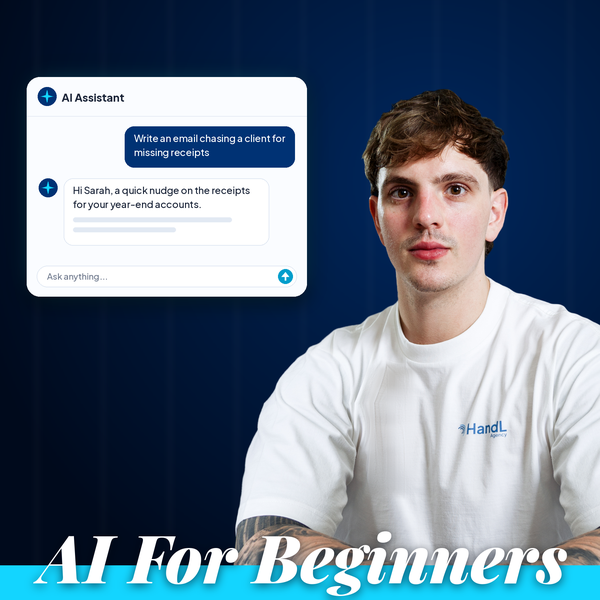









In 45 minutes with Bailey and Luke, you’ll see where your practice is losing search visibility, what the bookkeepers outranking you are doing differently, and the two or three changes that would make the biggest difference to your search results in the next 90 days.
Whether the answer is local SEO, content, technical fixes or AI search, you’ll leave with a clearer picture than you walked in with.
Jump on a call with Luke and Bailey today.
Not ready to book a call? Take the 3 minute AI scorecard first.
Or call us on 0117 457 6659, email contact@handlagency.com, drop us a message on WhatsApp or fill in the contact form.
Six to twelve months for meaningful results. Local SEO usually moves first, often inside 60 days, because local searches in the map pack are less competitive than the organic search results. Service page rankings follow at three to six months, which is where the first growth targets sit. Authority from content and backlinks builds after that.
For a sense of pace, Cain & Co reached position one for “bookkeeping London” in 60 days. That’s the fast end, and it came from a local term with clear intent. You’ll see movement in Google Search Console well before new clients arrive, which is why we report on enquiries rather than impressions.
Not always, and we’ll tell you if it isn’t. If you’re a sole practitioner close to capacity, a well-kept Google Business Profile, a handful of reviews and your accountant relationships may bring in all the work you can handle. A full SEO campaign would be money spent on enquiries you’d have to turn away, and your local SEO efforts can stay small.
It starts to pay when you want predictable growth: you’re hiring, you’ve got capacity to fill or you want to stop relying on two or three introducers. At that point SEO reduces your long-term cost-per-lead compared to paid search, because the rankings keep working after the invoice is paid. The free SEO audit will show you which side of that line you’re on.
Yes. Google lets you set up your Google Business Profile as a service-area business, which means you choose the towns or postcodes you cover and hide your home address. You can still rank in local searches and the map pack.
What changes is how much your other local signals matter. Consistent business information across your local listings, reviews from local clients and a location page for each area you serve do the work a high street office would otherwise do. Get those right and a home-based bookkeeper can compete with anyone.
By choosing what you rank for. A page targeting “catch-up bookkeeping” attracts people with a year of receipts and a deadline. A page targeting “monthly bookkeeping for limited companies” attracts people who want someone for the long term.
We map every relevant keyword to the kind of client typing it, then weight your service pages towards recurring work. Clean-up pages still earn their place, because a good clean-up job often turns into a monthly client. The difference is that the page is written to make that next step obvious, with ongoing bookkeeping offered as the natural follow-on.
Yes, and it’s the audience most bookkeepers never target. Firms offering accounting services search for outsourced and white label bookkeeping the same way small businesses search for a bookkeeper. Accounting firms want to see which software you use, how you handle month-end close, how you report back and how you fit alongside the accounting services they already offer. It’s the reverse of SEO for accountants, and it works on the same principles.
A dedicated page for that audience, backed by quality content written for accountants, gives them a reason to call. One accountancy relationship can send more work in a year than a dozen individual enquiries, which makes it one of the most valuable pages a bookkeeping website can have.
AI is taking over the routine parts of the job: categorisation, transaction matching and pulling data off receipts. It isn’t taking over judgement, client relationships or the messy books software can’t make sense of. That’s where the value in a bookkeeping practice now sits.
It does change your marketing. Business owners with Xero and a bank feed are asking what a bookkeeper gives them that software doesn’t. Your website needs to answer that clearly, and your SEO needs to target the clients who want accuracy and advice rather than data entry. It’s also why we cover AI search in every engagement, since the same people asking whether they need a bookkeeper are asking ChatGPT who to use. If you want the time back on your side too, HandL Agency builds AI automations for bookkeeping practices as well.
SEO isn’t it, and anyone promising otherwise is selling you something. The quickest routes for a bookkeeping business are the people you already know: accountants with more bookkeeping than they want, local business groups and past clients who would refer you if asked.
Paid advertising is the next fastest. Google Ads can put you at the top of the page this week, and it stops the day you stop paying. Most bookkeeping firms get the best result from both, with paid ads covering the gap while organic search builds and your SEO strategies start to pay off. Once the rankings arrive, the enquiries keep coming without a cost per click, and you can decide how much of the ad budget you still need.
Bookkeeping SEO is search engine optimisation built around how people look for a bookkeeper. The foundations overlap with SEO for accountants and any other sector: keyword research, technical SEO, content, links and local listings. What changes is what you target, what counts as proof and how potential clients decide who to trust.
Bookkeeper SEO leans heavily on local search, because most clients want someone nearby. It has to cover MTD, VAT returns and payroll accurately for small businesses, because Google treats financial content as high stakes. And it needs trust signals a generalist agency wouldn’t think of, like professional body membership, AML supervision and software partner listings. Search engine optimisation that misses those will struggle to rank a bookkeeping practice for anything worth having.
ChatGPT can help you make sense of data you give it, like a Google Search Console export or a list of page titles. It can’t crawl your whole site, test your page speed or tell you with confidence what’s broken. Treat it as an assistant rather than an auditor, and check anything it tells you against what the search engines themselves report.
There’s plenty you can do with free tools before hiring anyone, and the best free tools come from Google itself. Google Search Console shows which searches you already appear for in the search engine results pages. Google Keyword Planner gives you rough search volume for the terms you want. Claim and complete your Google Business Profile, ask your last five satisfied clients for a review, and check your name, address and phone number match everywhere they’re listed.
Then give each core service its own page, with the target keyword in the page title and meta description. Do that and your SEO efforts will already be ahead of most bookkeeping practices. Our free library has the checklists and templates if you want them. You don’t need us to start.
Usually, a little. A website should load in two to three seconds on mobile, and mobile-friendly design is essential for capturing local clients on the go, because plenty of business owners search for a bookkeeper on their phone between jobs. Technical SEO also means a clean site structure and a secure HTTPS connection, which matters more when you’re asking someone to share their bank feeds and financial records.
Then the on site SEO. Your key pages need meta descriptions that earn the click and on page optimisation that makes clear what each page is for. Structured data helps search engines understand business information like your services and the areas you cover, which improves visibility in Google and AI search. We check all of it in Google Search Console during the free SEO audit, so you know which web pages need work before any new service pages go live. Strong on page optimisation on a slow site still won’t rank, so we fix both together.
The ones closest to hiring. Keyword research for a bookkeeper should start with niche and local terms rather than “bookkeeping services”. Niche keywords are easier to rank for than broad keywords, and targeting specific keywords can improve conversion rates significantly, because the person typing “Xero bookkeeper for landlords” knows exactly what they want. Local keyword research then adds the local queries prospective clients use, like a town name plus “bookkeeper” or “payroll”.
That’s where local SEO and content meet. Each term needs a page or a piece of quality content that answers it properly, and mentions on other websites, like local business groups and software partner directories, help prove you’re the right answer. Service-related searches convert at 2% to 8%, so a handful of well-chosen terms with modest search volume can bring in more potential clients than one broad term you’ll never rank for.