Last updated: 27th November 2026

By Bailey Wilshire, Director and Head of AI
The best marketing strategies for accounting firms depend on what the firm wants: steady long-term growth, new clients fast, or a specific type of client. For most established accounting firms, SEO and AI search build the most reliable pipeline, LinkedIn builds the owner’s personal brand and brings in the highest-quality leads, and paid advertising adds speed for firms with the budget. A professional website sits underneath all of them.
Key takeaways
- Referrals built most practices, but you can’t predict them or choose who they send. That becomes a problem when you want to grow or target a niche.
- SEO and AI search are the strongest long-term growth strategy for an accounting business. You build an asset that keeps bringing in potential clients.
- PPC and paid social bring leads faster, often within the first few weeks, but they stop the day the budget stops.
- LinkedIn works for almost every accountant. Leads from a personal profile tend to be better qualified and willing to spend more.
- Every channel fails if your marketing only talks about your firm. Talk about the client’s problem, the outcome, the timeline and the proof.
- Once enquiries come in, AI can research each lead, reply quickly and handle the follow-up, so fewer potential clients slip away.
The 7 marketing channels at a glance
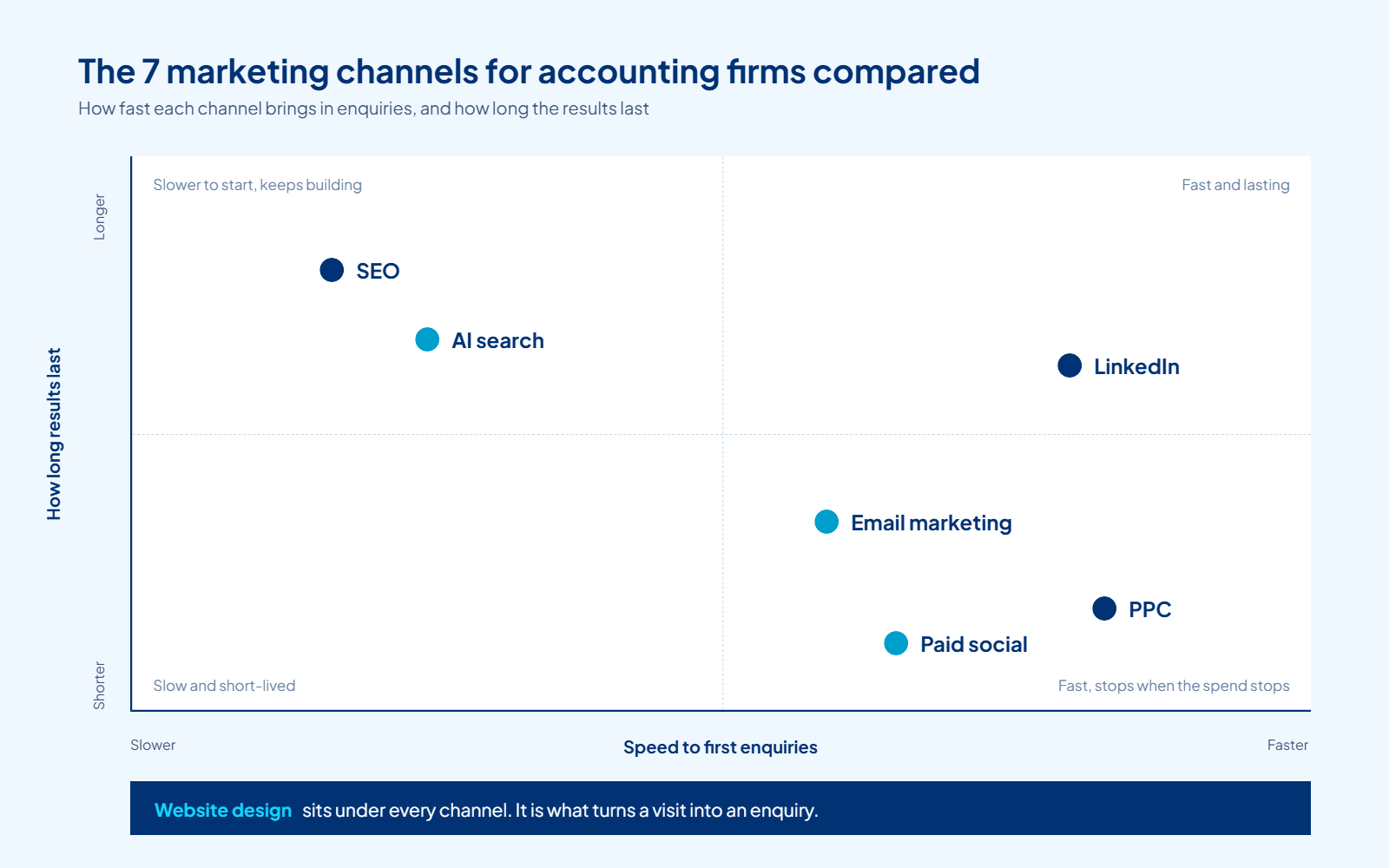
Here’s how the seven main digital marketing channels compare for accounting firms. Timelines come from the campaigns HandL Agency runs for finance firms.
| Channel | What it gets your firm | Time to first enquiries | Best for | Main drawback |
|---|---|---|---|---|
| Website design | Trust, so every other channel converts | Supports enquiries from launch | Every firm | Brings in little website traffic on its own |
| SEO | A steady stream of enquiries from Google | A few weeks to a few months on an established site. 6 to 12 months on a new domain | Firms building long-term, sustainable growth | Slow to start on a brand-new website |
| AI search | Pre-qualified enquiries from ChatGPT, Gemini and Google’s AI Overviews | Similar to SEO | Firms that want to be recommended, not only listed | Harder to track than Google rankings |
| A personal brand and higher-quality leads who want to work with you | From around one week once outreach is running | Owners and partners willing to share their views | Needs your opinions and stories every week | |
| PPC | Enquiries fast, from people searching right now | Often within 1 to 2 weeks | Firms that need to grow quickly and have the budget | Stops the day you stop paying |
| Paid social | Your firm in front of one type of client, again and again | Within a few weeks | Niche firms and remarketing to past visitors | Easy to pay for impressions that never become clients |
| Email marketing | Booked meetings without a large ad budget | A few weeks, once sending inboxes are warmed up | Firms with a clear target list and a smaller budget | Low conversion rates |
Why do most accounting firms rely on referrals?
Most accounting firms rely on client referrals because that’s how they were built. Many practices started years or decades ago and grew their client base through word of mouth from satisfied clients. For a sole practitioner or a small accounting practice that doesn’t need hundreds of new clients, that can work well.
Most accountants rely on referrals because that’s how it’s always been. They started their practice years or even decades ago and grew slowly through word of mouth. That’s not necessarily a problem. The problem is that referrals aren’t predictable. They come and go, and if you rely on them alone, you have no predictable pipeline.
Bailey Wilshire, HandL Agency
Referrals become a problem when you want to grow, or when you want a better type of client. You can’t point a referral at a niche, or shape your client base around the work you want to do.
With referrals, you get what you get. If you want to target a specific industry or a specific type of business, you can’t do that with referrals. That’s where the problem comes in.
Bailey Wilshire, HandL Agency
The firms that grow fastest invest more in marketing. The 2025-26 marketing budget benchmark study of US accounting firms from the Association for Accounting Marketing and Hinge found high-growth accounting firms put 2.1% of revenue into marketing, excluding staff costs, against 1% for the other firms in the study. Hinge also found that accounting firms tend to invest less in marketing than most other professional services firms.
How to choose the right marketing strategy for your accounting firm
There’s no single best channel to attract clients for every accounting firm. The right mix depends on six things:
- Your goals: steady growth, fast growth, or a different type of client
- The size of your firm and how many new clients your team can take on
- The businesses you want to work with: local small businesses, a specific industry, or larger firms
- The accounting services you want to sell, for example compliance work or advisory services
- How quickly you need new business
- Your budget
If you’re a good-sized practice that isn’t desperate for leads but wants a sustainable pipeline for long-term growth, I’d go down the route of SEO and AI search. You’re building an asset. Once you rank, and you keep it up, you’ll keep generating leads. With ads, if you switch off the budget, it’s gone overnight. That said, ads bring leads in much faster.
Bailey Wilshire, HandL Agency

The mistake that stops any marketing plan working
The most common marketing mistake accounting firms make is talking about themselves instead of their clients. Across the accounting industry, most websites, posts and ads lead with how long the firm has been in business, where it’s based and why it’s good. Your target audience cares about their own problems first.
The biggest mistake I see is firms only talking about their business and their experience, not the customer, the customer’s pain points and the outcome for the customers they help. Then they show very little proof to back it up. Talk about your firm, but customers don’t necessarily care about that. They care about their problems and whether you can solve them.
Bailey Wilshire, HandL Agency
Prospective clients want answers to four questions before they get in touch:
- Can you solve my problem?
- How long will it take?
- How much will it cost?
- Have you helped a business like mine before, and how?
Answer those in your website copy, your posts and your ads, and back them up with client success stories, client testimonials and case studies. Every channel below works better once your message does.
1. Website design
Your website is the centre of your digital presence. It’s where almost every potential client ends up, whichever channel found them. It’s where they research you, learn about your services and decide whether to trust you.
- The outcome: a site that explains your accounting services clearly and turns visitors from every other channel into enquiries.
- Expected results: a website doesn’t bring traffic on its own, but a well-built one lifts the results of SEO, ads and LinkedIn from launch. A new site built with SEO in mind can rank quickly. We took Final Expense Co, a brand-new US insurance company, from no website to page one of Google in six weeks.
- Pros: it builds trust, it supports every other channel, and you own it.
- Cons: an upfront cost, and a site that’s never updated slowly loses its rankings.
- Right for you if: your current site is slow, hard to use on mobile devices, or reads like a brochure about your firm.
- Wait if: your site already converts well. Put the budget into getting more people to it.
The bottom line: Best if your current site is old, slow or says nothing about outcomes. Fix it first, because every other channel sends people to it.
How HandL Agency runs it: we design around the buyer, not the homepage. Each page answers what a business owner wants to know before they call, with proof on the first scroll, fast load times on every screen and SEO built into the site from day one. The same team that builds the site runs the marketing into it. See our website design for accountants.
2. SEO (search engine optimisation)
SEO gets an accounting firm consistent leads by appearing on Google when potential clients search for an accountant. It covers the search engine rankings for your services, your location and the industries you serve, plus local SEO and your Google Business Profile.
- The outcome: a steady flow of enquiries from people actively searching for what you offer.
- Expected results: on a site with some history, we usually see results within a couple of weeks to a couple of months, because we go after quick wins first. A brand-new website on a new domain can take 6 to 12 months to show tangible results.
- Pros: you build an asset that keeps working, the leads arrive with intent, and it costs far less over time than paying for every click.
- Cons: it’s slow to start on a new site, and rankings drop if you stop maintaining them.
- Right for you if: you want sustainable growth and can give it six months or more.
- Wait if: you need clients this month. Start with PPC or LinkedIn and build SEO alongside.
Content marketing sits inside good SEO. Educational content that answers the questions your target audience asks, such as how Making Tax Digital affects their business or what changes at year-end, builds trust with potential clients and gives Google and AI tools more reasons to show your firm. Create valuable content around your target market’s real questions rather than industry news nobody searches for, and keep it focused on the accounting services you want to sell.
We focus on quick-win opportunities first. If the site and domain have some history, that can mean results within a couple of weeks to a couple of months. A brand-new website on a new domain can take six to twelve months to see tangible results.
Bailey Wilshire, HandL Agency
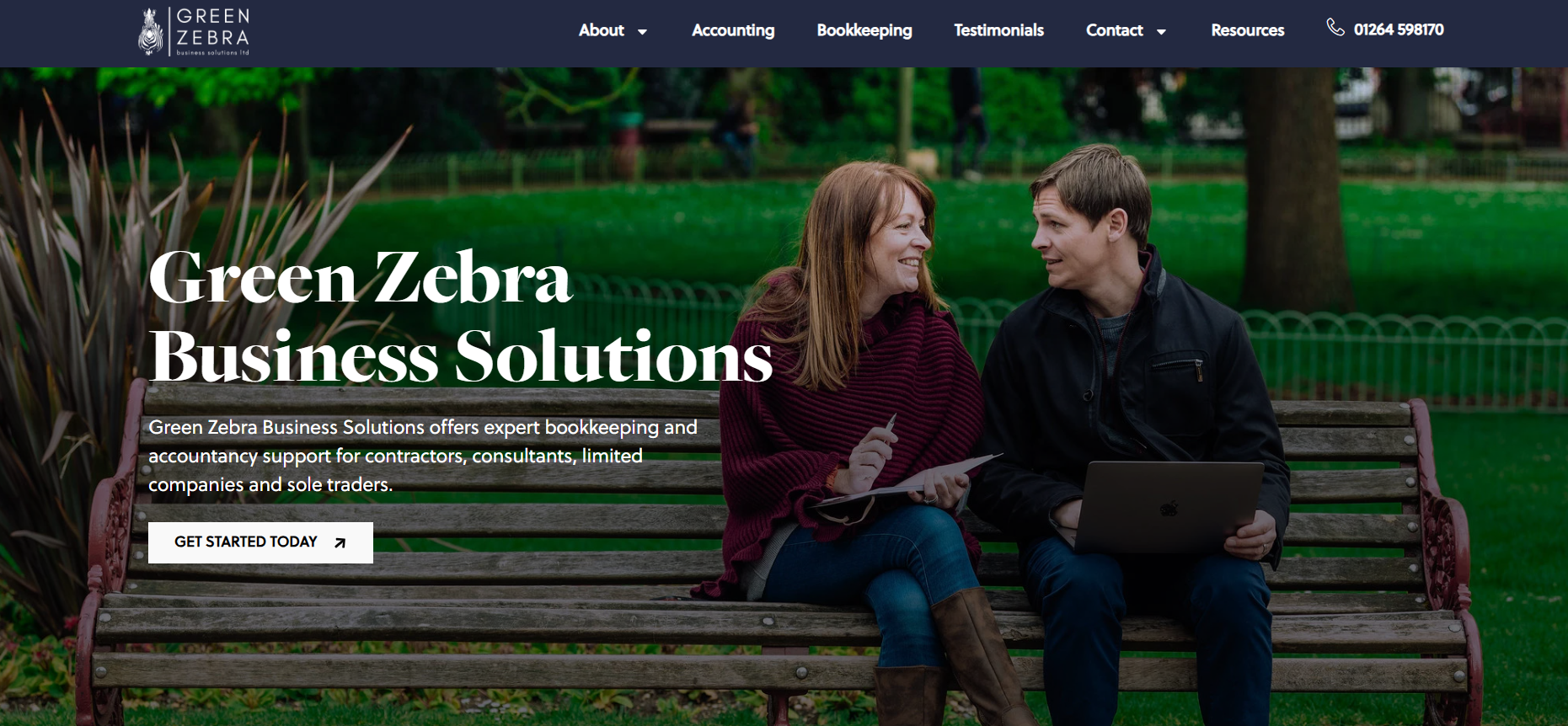
Proof: Green Zebra Business Solutions, an accounting and bookkeeping firm, sat outside the top 100 for every Hampshire search term in November 2025. Within a year of its new site launching, it ranked number one on Google for “bookkeepers in Hampshire” and in the top three across its core bookkeeping searches. Read the Green Zebra case study.
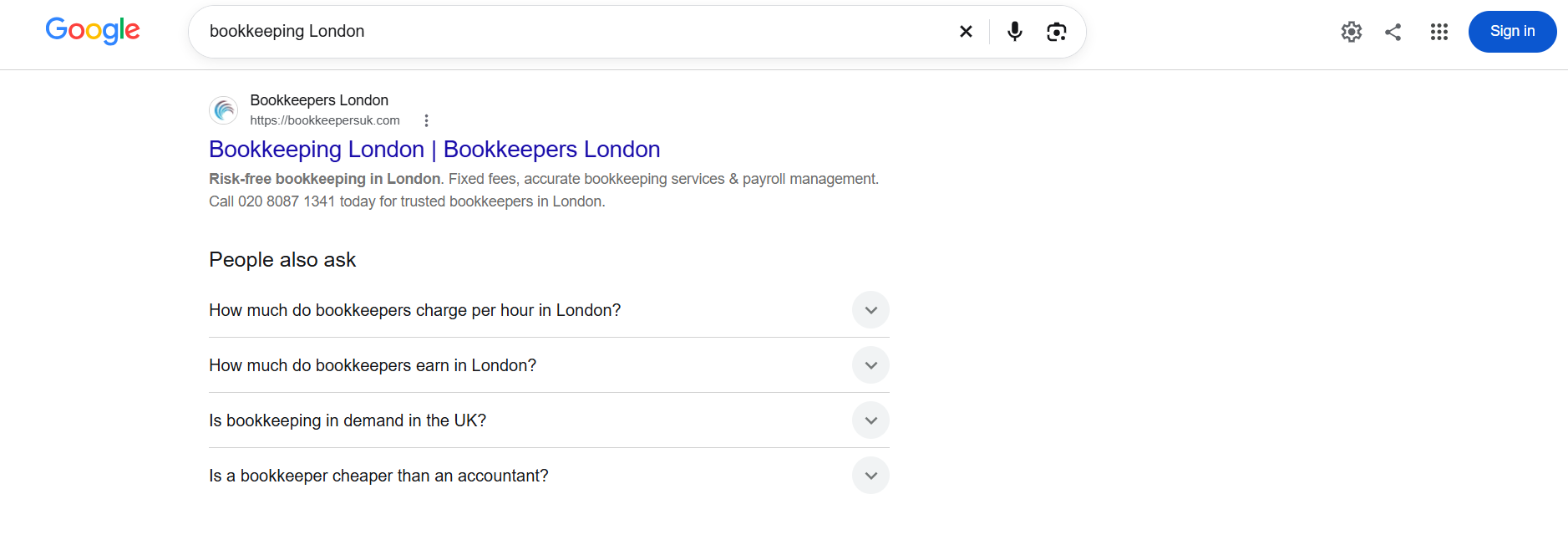
For Cain & Co, a London bookkeeping firm, we reached number one on Google for “bookkeeping London” within 60 days. Between September 2025 and June 2026, the campaign brought in 14 organic enquiries and 6 signed clients worth £30,948 a year. Read the Cain & Co case study.
The bottom line: Best if you want a steady pipeline you own. Expect quick wins within weeks on an established site, and 6 to 12 months on a new domain.
How HandL Agency runs it: we rank firms for the searches buyers type when they’re ready to pick up the phone, not the easy terms that look good in a report. That means research keywords with real buying intent, location and industry pages, technical fixes, and helpful content Google trusts for finance. We report on leads, not only rankings. See SEO for accountants.
3. AI search
AI search gets your firm recommended when someone asks ChatGPT, Gemini, Perplexity or Google’s AI Overviews to find an accountant. The leads tend to be well qualified and trust you more, because the AI has already done the research and recommended you.
Business owners already ask AI first. A 2026 survey of 500 UK small businesses for Ravical found seven in ten act on AI-generated financial, tax or business advice before consulting their accountant.
- The outcome: your firm named as one of the answers when potential clients ask AI who to hire.
- Expected results: similar timelines to SEO. Firms with an established site and strong reviews move faster.
- Pros: highly qualified leads, less competition than Google today, and it works hand in hand with SEO.
- Cons: it’s harder to measure than Google rankings, and AI tools change how they choose sources often.
- Right for you if: you’re investing in SEO already, or your ideal clients are younger, tech-savvy business owners.
- Wait if: your website has no content or reviews yet. Build those first.
The bottom line: Best run alongside SEO, on the same foundations. Expect similar timelines, with faster progress if you already have content and reviews.
How HandL Agency runs it: we get your firm into the sources AI engines already trust, write content that answers the questions buyers ask AI in their own words, and build the experience and trust signals AI looks for in a finance firm. We report on AI visibility and citations, and run it inside the same strategy as your SEO. See AI search optimisation.
4. LinkedIn
Of all the social media platforms, LinkedIn is the best for accountants who want business clients. It grows the owner’s personal brand, which matters more as AI makes generic content easier to produce, and it brings in leads who want to work with you specifically rather than with any firm.
Where an accountant can always benefit is building their personal brand on LinkedIn. Post about your opinions, your wins, your losses, your experiences and what you’ve learned. People relate to you, they follow you, and eventually they want to work with you.
Bailey Wilshire, HandL Agency
- The outcome: a profile that helps you attract clients in your niche, books meetings with them and makes you the accountant people already know when they’re ready to switch.
- Expected results: once the profile is set up and outreach is running, results can start within the first week. How fast depends on the state of the profile when you start.
- Pros: it’s free to post, the leads are high quality, and you can target a niche precisely.
- Cons: it takes consistency and your own input every week. A firm page posting company news rarely works. People follow people.
- Right for you if: you’re an owner or partner with opinions and experience to share, and your clients are business owners.
- Wait if: nobody at the firm is willing to put their name and face to it.
We’ve found the leads that come from LinkedIn tend to be higher quality than the ones from SEO. That’s not always the case, but they’re usually willing to spend more, and they want to work with you directly because they found you through your personal profile.
Bailey Wilshire, HandL Agency
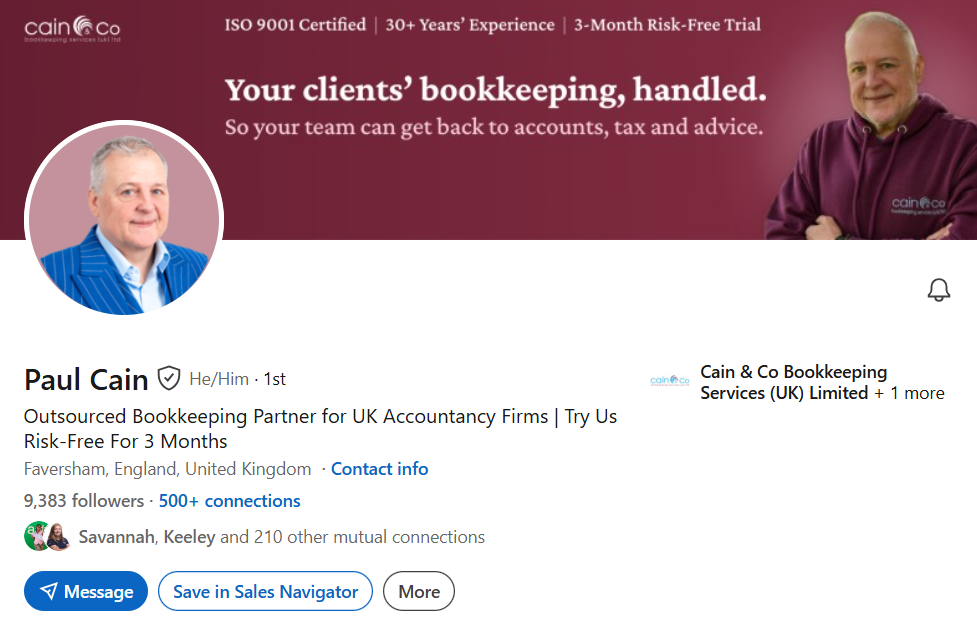
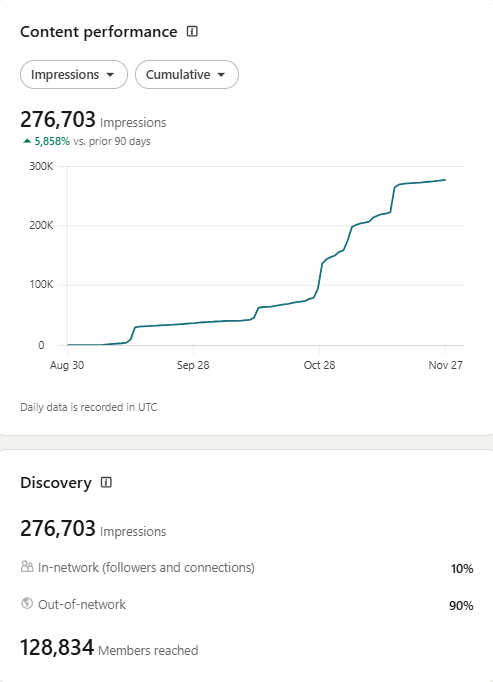
Proof: we run LinkedIn for Paul Cain, director of Cain & Co, who sells outsourced bookkeeping to accountancy practices. His profile booked 18 meetings in the first two months. In the last 90 days alone, his posts reached 276,703 impressions, 90% of them from people outside his network. He now has more than 9,300 followers, and the profile has booked more than 50 meetings since January 2026.
The bottom line: Best if an owner or partner will share their views every week. Expect meetings from the first week once outreach is running.
How HandL Agency runs it: a daily posting plan built from your own stories and opinions, mixing educational content, personal posts, proof and free resources, outreach to around 100 ideal clients a week, comments on their posts, and a written message sequence in your voice. Regular strategy sessions keep the content current with what’s happening in your firm.
5. PPC (pay-per-click)
PPC puts paid adverts at the top of Google for the searches you choose, so you appear in front of people looking for an accountant right now. It’s the quickest paid way to generate leads, but it’s one of the most expensive channels. It’s worth it when you need to grow quickly and have the budget.
- The outcome: enquiries from people with an immediate need, such as a business owner looking for a new accountant before year-end.
- Expected results: first enquiries often come within the first week or two. Expect 4 to 6 weeks to get the cost per lead where you want it, while Google’s bidding gathers data.
- Pros: the fastest way to get in front of active searchers, precise control over keywords and locations, and clear tracking.
- Cons: costs climb in competitive areas, results end when the budget ends, and badly set up campaigns spend money on the wrong clicks.
- Right for you if: you need new clients this quarter, want to fill a busy season, or want to test demand for a new service.
- Wait if: your website doesn’t convert yet. Fix the landing pages first, or you pay for visitors who leave.
The bottom line: Best if you need clients this quarter and have the budget. Expect first enquiries within a week or two, and results that stop when the spend stops.
How HandL Agency runs it: keyword research built around buying intent, finance compliance checked before ads go live, landing pages written for finance buyers, and remarketing for longer decisions. We report on leads and return, not clicks. See PPC for finance firms.
6. Paid social
Paid social is paid advertising on social media platforms: LinkedIn and Meta (Facebook and Instagram). It’s ideal for reaching target clients by job title, industry or business size, and for remarketing to people who’ve already visited your website.
- The outcome: your firm in front of the exact businesses you want, repeatedly, until they’re ready to talk.
- Expected results: first leads usually come within a few weeks. Expect 4 to 6 weeks of testing before the cost per lead settles.
- Pros: precise targeting, strong for niche firms, and it keeps you visible to people who visited but didn’t enquire.
- Cons: people on social media aren’t searching for an accountant, so it often takes several touches before they enquire, and it’s easy to pay for likes and impressions that never turn into clients.
- Right for you if: you serve a defined niche, such as landlords, contractors or e-commerce businesses, or you want to remarket to past website visitors.
- Wait if: you have no website traffic to remarket to and no clear ideal client yet.
The bottom line: Best for niche firms and remarketing to past visitors. Expect first leads within a few weeks, then a few weeks of testing before costs settle.
How HandL Agency runs it: creative that stands out from every other finance firm in the feed, compliance handled before launch, and targeting built around your ideal client. See paid social for financial services.
7. Email marketing
Email marketing covers two different things: cold outreach to businesses that don’t know you yet, and email campaigns to people who do, such as existing clients and past enquiries. It’s a strong choice when you don’t have a large budget.
With AI, cold emails can now be researched and written for each prospect individually. But conversion rates are low, and they’ve fallen as more businesses have started sending cold email.
- The outcome: booked meetings with businesses on your target list, plus regular contact that keeps your firm in mind with existing clients.
- Expected results: first replies within a few weeks, once the sending inboxes are warmed up. A small, highly personalised campaign we ran to local accountants got a reply rate of around 5%.
- Pros: low cost, precise targeting, and it scales without a big ad budget. Emails to your own list are cheap and effective. Litmus puts the average return on email marketing at $36 for every $1 spent.
- Cons: low conversion rates on cold email, careful setup needed to land in inboxes rather than spam, and UK rules on marketing emails to check before you start.
- Right for you if: you know exactly which businesses you want and have a smaller budget.
- Wait if: your website and proof aren’t in place. A cold email sends people to research you.
The bottom line: Best if you have a clear target list and a smaller budget. Expect first replies within a few weeks, at low conversion rates.
How HandL Agency runs it: AI researches every prospect the way a good salesperson would, then writes a personal email for each one. The list is built around your ideal client, the sending is set up to land in inboxes, and replies are tagged and pushed into your CRM ready for a conversation. See AI email marketing.

Get a marketing plan built for your firm
In 45 minutes, we’ll show you where your pipeline’s leaking clients and the two or three channels that would make the biggest difference to your firm in the next 90 days. You’ll leave the call with a clear plan for your marketing.
How the channels work together
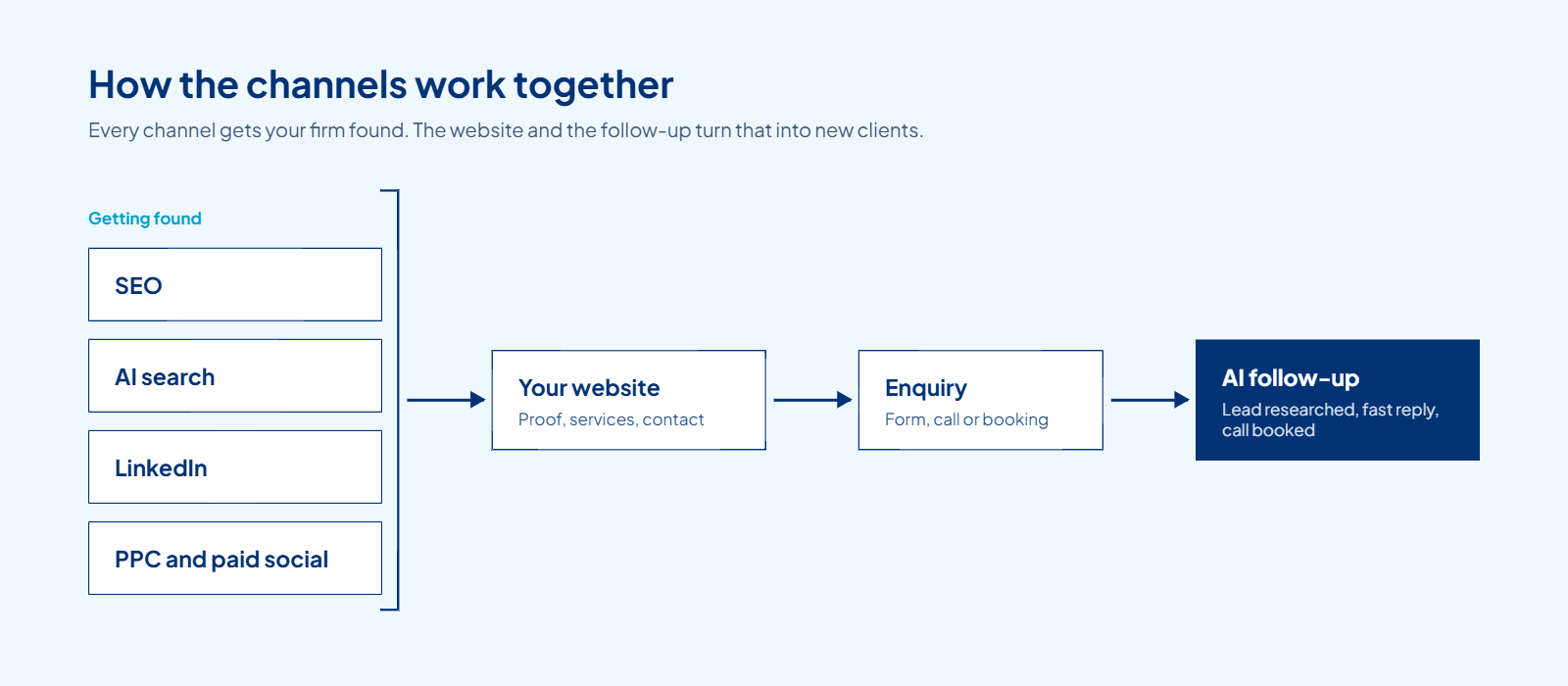
The most effective marketing strategies use more than one channel, because each one does a different job.
- SEO and AI search together. They rely on the same foundations: content marketing, a trusted website and strong reviews. Appearing on Google, Bing and in AI answers covers almost everywhere a business owner looks for an accountant.
- Add LinkedIn for the personal brand. SEO and AI search bring in leads for the firm. LinkedIn brings in leads who want to work with you. Running both means you’re growing the business and your own name at the same time.
- Add ads on top for speed. For larger firms with the budget, PPC and paid social bring leads while SEO builds, and remarketing brings back visitors from every other channel.
- The website holds it together. Every channel sends people to it, so it has to convert.
If you’d rather have it run for you, see how we deliver digital marketing for accountants.
| Firm stage | Channels we’d run | Why |
|---|---|---|
| Small accounting firm | Website, SEO, AI search, LinkedIn | Builds a lasting pipeline and a personal brand without a large monthly spend |
| Growing firm targeting a niche | Website, SEO, AI search, LinkedIn, email outreach | Adds direct contact with the exact businesses you want |
| Larger firm wanting faster growth | All of the above, plus PPC and paid social | Ads bring leads now while the long-term channels compound |
Which marketing channel should you start with?
Use this to shape your first marketing plan:
- Every new client comes from referrals and you want more control: start with SEO and AI search.
- You need new clients this quarter: start with PPC, and LinkedIn outreach.
- You want a specific type of client: LinkedIn and email outreach, with paid social to stay visible.
- Your website is old, slow or says nothing about outcomes: fix the website first. Every other channel depends on it.
- You have very little budget: post on LinkedIn every day, set up your Google Business Profile so local businesses can find you, and ask happy clients for reviews.
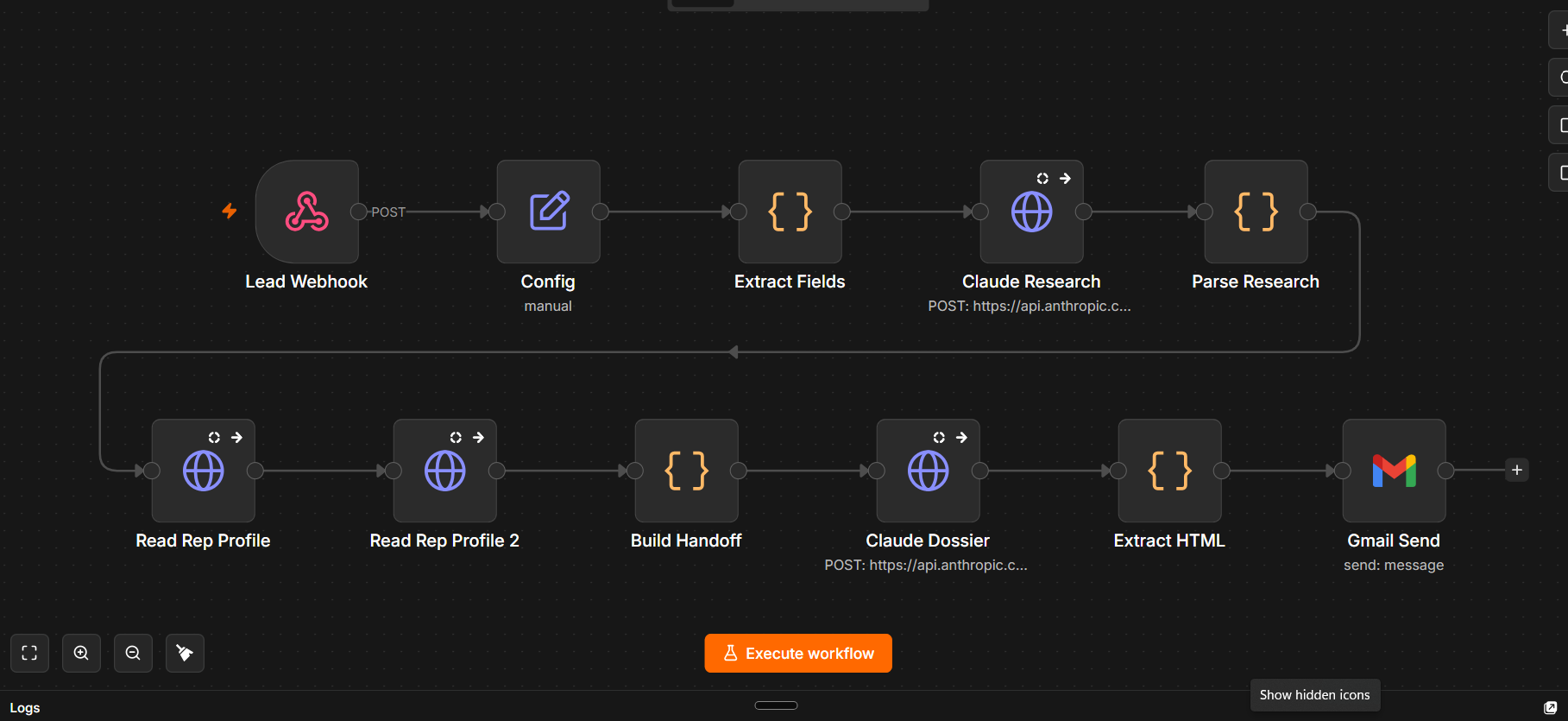
Once the leads come in, let AI handle the follow-up
Marketing brings potential clients in. What happens next decides whether they become paying clients. Firms lose most enquiries to slow replies, no follow-up and calls where the accountant knows nothing about the prospect.
Speed matters. A 2011 study of 1.25 million leads, published in Harvard Business Review, found firms that contacted leads within an hour were nearly seven times more likely to qualify them than firms that waited an hour longer.
AI can take over most of that work:
- Research every enquiry. Our lead research automation researches each new lead and sends you a briefing within minutes of the enquiry.
- Reply straight away. An instant, personal first response so the lead doesn’t go elsewhere while you’re in a meeting.
- Follow up automatically. Reminder sequences for leads who haven’t booked or replied.
- Write up every call. Our meeting notes automation files notes and actions to the right place after each call.
- Draft proposals and engagement letters from your call notes, for you to check and send.
- Turn client wins into proof. Draft case studies and posts from results, so your marketing always has fresh evidence.
Four prompts you can copy into ChatGPT or Claude today:
Research [company name, website] and give me a one-page brief before a discovery call: what they do, size, likely accounting needs and three questions to ask. Only use what you can source, and list the sources.
Write a short follow-up to [name] at [business], who enquired about [service] on [date] but hasn't booked a call. Mention [one detail from their enquiry]. Offer two call times. Under 100 words. Friendly and direct. British English.
From these call notes, write a one-page proposal summary: their situation, what we'll do, the timeline and the next step. Don't invent figures or prices. Put anything missing in [square brackets]. Notes: [paste notes with personal details removed].
Turn this client result into a short case study with four parts: the problem, what we did, the result with numbers, and a quote placeholder. Under 250 words. Results: [paste results].
Use a business plan that doesn’t train on your data, and check every output before it reaches a client. Our guide to using ChatGPT as an accountant covers safe use in more detail. For more, download 25 AI Prompts Your Firm Will Actually Use, or see how we build AI automation for finance firms.
Common accounting firm marketing mistakes
- Talking about the firm, not the client. Lead with the problems you solve and the outcomes you deliver.
- No proof. Use real numbers, case studies, reviews and client testimonials.
- Judging SEO too early. On a new site, give it six months or more before deciding.
- Switching ads on and off. Each restart loses the data the campaign has built up and can send the bidding back into a learning period.
- Posting on LinkedIn without a clear ideal client. Write for one target audience, not everyone.
- Treating content marketing as a blog nobody reads. Write educational content that answers the questions potential customers ask, then share it on LinkedIn and in email campaigns so it reaches them.
- Sending traffic to the homepage. Ads and emails convert better on a page built for that service.
- Not tracking. Set up Google Analytics and track enquiries, so you know which online marketing efforts bring in clients and which marketing efforts to cut.

Find out where your firm’s marketing stands
Take our free AI and marketing assessment. It takes three minutes and shows where your firm sits today, plus the first steps that would bring in the most new business.
Frequently asked questions
How much should an accounting firm spend on marketing?
There’s no fixed figure, but the fastest-growing accounting firms spend more. In the 2025-26 AAM and Hinge benchmark study of US accounting firms, high-growth firms put 2.1% of revenue into marketing, excluding staff costs, compared with 1% for other firms. Start with what a new client is worth to you and how many you need.
What is the fastest way for an accountant to get new clients?
LinkedIn outreach and PPC are the fastest. LinkedIn can start bringing in meetings within the first week once the profile is set up and outreach is running. PPC often brings first enquiries within the first week or two, then takes 4 to 6 weeks to get the cost per lead right.
Is SEO worth it for a small accounting firm?
Yes, if you can give it time. SEO builds an asset that keeps bringing in enquiries, and local SEO helps you win small businesses and local businesses nearby without paying for every click. On a new domain, expect 6 to 12 months for tangible results.
Do accounting firms need to show up in AI search?
Yes. Business owners increasingly ask ChatGPT and other AI tools for advice and recommendations before they speak to an accountant. If your firm isn’t one of the sources AI trusts, it won’t be recommended. AI search optimisation runs alongside SEO.
Is LinkedIn worth it for accountants?
Yes, for most accountants who work with business clients. A personal brand on LinkedIn brings in leads who want to work with you specifically, and in our experience they tend to be better qualified and willing to spend more.
Should accounting firms stop relying on referrals?
No. Keep asking happy clients for referrals, because they’re still among the strongest ways to win new business. Add channels you control alongside them, so your growth and your client base don’t depend on who happens to recommend you.
What content marketing works for accounting firms?
Educational content that answers your clients’ real questions works best: guides to deadlines and tax changes, explainers on your services, client success stories and short videos. Content marketing builds trust before a potential client gets in touch, and the same piece can feed SEO, AI search, LinkedIn and email.
About the author

Bailey Wilshire is Director and Head of AI at HandL Agency, which works exclusively with finance firms on marketing and AI. He was on track to train as an accountant before moving into marketing and AI, so he knows how an accounting firm runs from the inside. Before HandL Agency, he managed SEO for more than 20 UK businesses and built AI search strategies for national finance brands. He now leads the AI side of HandL Agency, from AI audits to the automations that turn new enquiries into clients.
Connect with Bailey on LinkedIn
Sources and methodology
Interview. Practical insights and quotes come from an interview with Bailey Wilshire in November 2026. Quotes are lightly edited for clarity.
Experience base. HandL Agency works exclusively with finance firms: accountants, bookkeepers, financial advisers and insurance brokers. Timelines and results come from HandL Agency campaigns and published case studies.
Statistics. Only figures from named, credited sources are included. US data is labelled as such. All statistics were checked in November 2026.
Use of AI. This article was researched and drafted with AI assistance, then reviewed and edited by Bailey Wilshire and Luke Iles.
Updates. We review this guide quarterly.
Sources
- CPA Practice Advisor, High-growth accounting firms spend twice as much on marketing (AAM and Hinge 2025-26 study): https://www.cpapracticeadvisor.com/2025/06/02/high-growth-accounting-firms-spend-twice-as-much-on-marketing-study-finds/161501/
- Accounting Today, Fastest-growing firms spend double on marketing: https://www.accountingtoday.com/news/fastest-growing-accounting-firms-spend-double-on-marketing
- CMOtech UK, UK SMEs turn to AI before accountants (Ravical survey of 500 UK businesses): https://cmotech.uk/story/uk-smes-turn-to-ai-before-accountants-survey-finds
- Litmus, The ROI of email marketing: https://www.litmus.com/blog/infographic-the-roi-of-email-marketing
- Google Ads Help, Duration of the learning period for campaigns: https://support.google.com/google-ads/answer/13020501
- Harvard Business Review, The short life of online sales leads: https://hbr.org/2011/03/the-short-life-of-online-sales-leads
- HandL Agency, Green Zebra Business Solutions case study: https://handlagency.com/case-studies/green-zebra-business-solutions/
- HandL Agency, Cain & Co Bookkeeping Services case study: https://handlagency.com/case-studies/cain-and-co-bookkeeping-services/
- HandL Agency, Final Expense Co case study: https://handlagency.com/case-studies/final-expense-co/
This guide is general information to help accounting firms plan their marketing. It isn’t legal, regulatory or financial advice.