

Cathy Vass
Green Zebra Business Solutions


Introducers built your book. They also decide how fast it grows.
Nobody wakes up wanting a financial planner. They want to know whether they can retire at 60, what to do with a pension they’ve forgotten about, or where the money from the business sale should go. That week, they search on Google or ChatGPT. If your firm isn’t there, someone else’s is.

Two solicitors and an accountant send you work. When they’re busy, the diary fills. When one of them retires, a third of your new business goes with them.
That isn’t a criticism of introducer relationships. They produce the best-fitting clients you have. The problem is that you can’t turn the tap. There’s no lever you pull in March to change what August looks like, and every conversation about growth ends in the same place: we need more introducers.
Organic SEO provides a steady stream of leads over time, which is a different shape of pipeline entirely. It’s the only channel where the volume is yours to influence rather than somebody else’s to remember.
Someone built you a blog. It ranks. Traffic goes up quarter on quarter and the dashboard looks healthy.
Then you look at where the enquiries came from and it’s the same two introducers.
Here’s why. The pages rank for people doing their own research: how much do I need to retire, what is the annual allowance, can I take 25% tax free. Those readers aren’t hiring anyone. They’re reading. Keyword volume tells you how many people type something. It tells you nothing about whether any of them would pay for advice, and most SEO strategies for financial advisors never make that distinction.
High-intent search behaviour often occurs during major life events. Redundancy. Divorce. An inheritance. A business sale. Turning 55 and realising nobody has ever explained drawdown properly.
In those weeks, people run online searches, read three or four sites, look at who’s nearby and enquire with one or two. There are 131,000 monthly searches for the keyword “financial advisor” alone, and the shortlist is made on the search results page long before a fact find is ever booked.
If you weren’t in those Google searches, you weren’t in the running. You’ll never know the decision happened.
“Which financial advisers are good for pension consolidation near Bristol?” “I’ve sold my company, who should I speak to about the proceeds?” “Best independent financial adviser for someone approaching retirement.”
ChatGPT gives three names and a reason. Google AI Overviews gives three names and a reason. The person never reaches a search engine results page at all.
Many financial advisors have never checked whether they appear in those answers, and neither have the agencies billing them monthly. AI search doesn’t rank ten options and let the reader decide. It picks, and the firms it picks now are the ones it will keep picking.
Almost four in ten clicks go to one firm. Positions four and below split what’s left, which is why “we’re on page one somewhere” is not the same as being found.
People looking for advice want to know where you are, even when they’re happy to meet on video. Local SEO delivers an ROI of $13 for every $1 spent, which is the easiest case for SEO investment we can make.
Your Money or Your Life pages are held to a stricter standard than almost anything else on the internet. Content that demonstrates E-E-A-T improves SEO effectiveness, and it’s the part a generalist agency has never had to think about.
Answer 15 questions to see how well your firm is really using AI and marketing, and what to fix first.
It takes three minutes; you get immediate recommendations plus free assets matched to your results.
Seven things have to happen for a financial advisor business to win the search. Done separately they underperform. Done together they compound.

Keyword research identifies the terms potential clients use online, and those terms are almost never the ones you’d use in a suitability report. Nobody types “decumulation” into Google.
We start with the events that create advice, then work backwards to the language. Redundancy, pension transfer, business sale, inheritance, retirement planning at a specific age. Proper keyword research tools tell us what people type around each of those, and what they type immediately afterwards, which is usually where the buying intent shows up.
Long tail keywords account for 70% of all search traffic. They carry fewer searches each, so they rarely impress anyone in a pitch, but high-intent keywords improve your chances of attracting relevant clients and long tail is where nearly all of that lives. Your target keywords should be the phrases somebody types the week they’ve decided to act, not the ones with the biggest number beside them.
“Pension transfer advice” could be a 34 year old consolidating three old pots worth £40,000, or a 58 year old with a defined benefit scheme and a decision that needs a specialist. Same words. Completely different client.
We classify every term by what the person behind it is trying to do, then decide which of them your firm should own. Google suggests shows how a query gets refined once someone starts typing. The search engine results pages show what Google already believes the searcher wants, which tells us what a page has to contain before it stands a chance.
Getting this right is what stops you building a keyword strategy that ranks well and converts nothing.
Even firms that meet clients entirely on video get most enquiries within a radius. Handing over a pension is not a decision people make with a company they can’t place on a map.
Local SEO optimises your Google Business Profile for geographical searches, and creating a Google Business Profile properly is the first thing we do, because a half-finished one is the most common reason local businesses never appear. Then we maintain NAP consistency across directories, since mismatched addresses and old phone numbers quietly undo everything else.
After that it’s location-specific content, which improves local SEO rankings significantly, and a review process that runs rather than one you keep meaning to start. The aim is the Google Maps pack for the local searches happening around your office, where national firms rarely compete and where enquiries arrive with a postcode attached.
On page SEO focuses on the content and structure of your web pages, and it’s the area where advisers have the highest control over their own results. It’s also where most firms lose people.
Publishing educational content helps clients understand complex topics, and complex topics are your entire proposition. Relevant content explaining what happens to a pension on death, or what a transfer actually involves, does more selling than any strapline. Blog content written to keep a schedule does none.
We build each of your financial planning services its own page, tie them together with internal links so authority moves between them, and write the page title and meta description to earn the click rather than describe the page. Client testimonials improve credibility and search rankings at the same time, so they go on the pages doing the work, not on a tab nobody visits.
Every page has one job: convert visitors who arrived with a question into people who book.
Off page SEO refers to the signals that sit outside your own website: backlinks, citations, mentions and reviews. You have medium control over them, which is precisely why search engines weight them so heavily. Anyone can write their own homepage.
Backlinks from reputable sites enhance your site’s authority, and in regulated advice the source matters far more than the number. Our link building targets authoritative websites in advisory, wealth and the wider financial services industry, so the websites pointing at yours are ones a compliance officer would recognise. Quality backlinks earned this way keep working for years.
This is the slowest part of any SEO campaign and the hardest to fake, which is exactly why it separates firms that hold their rankings from firms that spike and slide back.
Technical SEO ensures site performance and accessibility for users, and it supports both your on page and off page efforts. Neglect it and good content underperforms on a site that can’t carry it.
Fast-loading and mobile-friendly sites improve user experience and rankings together, so page speed and mobile rendering get fixed before we write a word. Financial websites must comply with industry regulations and use HTTPS, which carries more weight in this sector than most, because you’re asking people to share their circumstances before they’ve met you. If the site itself needs rebuilding, our website design for financial advisors team sits in the same room.
Everything gets tracked through Google Search Console and Google Analytics from day one, so you can see what changed and when. Most agencies skip technical SEO work because site owners can’t see it. It’s usually the cheapest performance you’ll ever buy.
Search engine optimisation gets you into the results. Answer engine optimisation gets you into the answer.
They’re related jobs, not the same one. Ranking on Google, Bing and the other search engines rewards depth and authority. Getting quoted in Google AI Overviews or ChatGPT rewards structure: clean answers a machine can lift, schema that tells it what your firm is and does, and enough corroboration elsewhere that it trusts what it found.
We build for both from the start, because retrofitting a site for AI search after the fact costs more than doing it once. The firms taking those recommendation slots now will still hold them when everyone else starts asking about it.
Paid brings enquiries this week and stops the day you stop spending. Organic search takes six to twelve months and then keeps producing. Most marketing plans for advisers need both, with ads covering the gap while search builds underneath.
What organic search does that nothing else does is compound. A page written this year still drives traffic in year four, at no additional cost, which is why the maths works so well for a business with a long client lifetime and a high value per relationship.

£30,948 a year in new business & rank 1 on Google for London’s toughest bookkeeping terms.

We took a brand-new US insurance company from no website to page one of Google in six weeks.

An accounting firm nowhere on Google. Under a year later, number one in Hampshire.

A twenty-page dashboard of impressions and domain authority tells you nothing about whether the retainer paid for itself. Our reporting shows three things: the terms you’re ranking for, the organic traffic those rankings bring, and what it turned into. If a number can’t be connected to an enquiry, it doesn’t go in the report.
Most agencies sell traditional SEO, local SEO and AI visibility as three separate lines. You end up funding one and hoping the others sort themselves out. Our SEO campaigns cover Google, the AI answer engines, the map pack and organic search results under a single strategy, because they draw on the same foundations and splitting them just doubles the admin.
Link building is still the biggest off-page factor in search rankings, and generic guest post networks are why most advisers’ links have never moved anything. Our partner network sits inside advisory, wealth, accountancy and brokerage publishing across the UK, Europe and the US. Available as an add-on to any engagement.
Quarterly catch-ups, dinners, beers, pool nights, coffees, darts, football, rugby and cricket.
We put real time into the firms we work with because the work is better when the relationship is. The accounts that compound for us are the ones that run as partnerships, not contracts.

Free SEO audits, keyword strategy frameworks, an on page SEO checklist, technical templates, core web vitals guides, page title worksheets and content planning resources you can download today.
Built for financial advisors, accountants, bookkeepers and insurance brokers who want to improve their online visibility before they bring anyone in. Real resources for firms ready to drive traffic that converts and build search visibility that lasts.


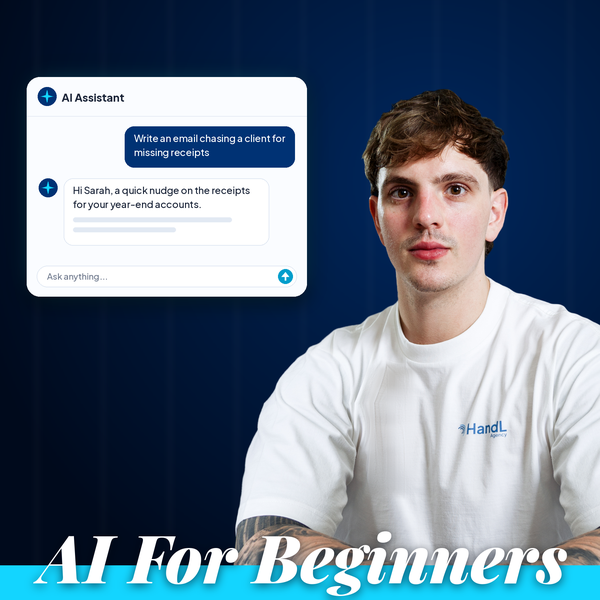









In 45 minutes with Bailey and Luke, you’ll see which searches your ideal clients are running, where your firm currently sits on them, and the two or three changes that would move the most in the next 90 days.
Whether the answer is local SEO, content, technical work or AI search, you’ll leave with a clearer picture than you walked in with.
Not ready to book a call? Take the 3 minute AI scorecard first.
Or call us on 0117 457 6659, email contact@handlagency.com or fill in the contact form.
SEO can take 6 to 12 months to start showing results, and the order matters more than the headline. Local searches move first, often inside 60 days. Service page rankings follow at three to six months. Authority from content and links compounds after that. You’ll see it in Google Search Console well before you see it in the diary.
Before you need it. SEO positions financial practices for clients facing major life events, and those events don’t announce themselves in advance. A redundancy round, a business sale or someone turning 55 happens on their timetable, not yours. Pages built now are what make you findable in that specific week, months later, when the search actually gets typed.
Rankings, organic traffic and enquiries, reviewed every month. Regularly measuring and refining SEO performance is crucial for long-term success, because the terms that convert are rarely the ones you predicted at the start. We use Google Search Console for what people searched before they landed and Google Analytics for what they did afterwards, then move budget towards whatever is producing.
Yes, and by a wider margin than most people assume. The number one organic search result earns a 39.8% clickthrough rate. Second and third split a much smaller share, and by position five you’re competing for scraps. That’s why we’d rather own ten specific searches outright than sit mid-page on fifty.
Often, and it’s worth targeting. Optimising for featured snippets can enhance visibility in search results for educational queries, which is most of what people type before they’re ready to appoint anyone. The same structure that wins a snippet is what gets a page quoted in Google AI Overviews and ChatGPT, so it’s one piece of work with two returns.
Both, and the second one matters more. Publishing helpful articles on financial topics establishes expertise and builds rapport with clients before they’ve met you, so the person who arrives at a fact find has already decided you know what you’re doing. That shortens the sales conversation considerably.
Google’s E-E-A-T framework evaluates authority in financial content specifically, and advice pages fall under Your Money or Your Life, the strictest standard on the internet. It means Google wants evidence that a qualified person wrote what’s on the page. Named authors with credentials, real client testimonials and citations to sources that hold up. It’s the requirement most generalist agencies have never had to satisfy.
Often more so. A firm at capacity doesn’t need more enquiries, it needs better ones, and choosing what you rank for is how you get them. Rank for “how much do I need to retire” and you get readers. Rank for “financial adviser for defined benefit transfer” and you get clients who already know they need paying advice.
It’s a constraint, not a blocker. We write, someone qualified in your firm reviews for accuracy and compliance, and nothing publishes without that sign-off. That’s the only part of the process we can’t do without you. Financial advice SEO that skips the review step is how firms end up with promotions they can’t defend.
Yes. 46% of all Google searches have local intent and 76% of people who make a local search visit a related business within 24 hours. Even national firms pull most enquiries from a radius. A complete Google Business Profile, consistent NAP and location-specific pages will usually outperform anything else in your first quarter.
On page SEO covers the content and structure of your pages, where you have the most control. Off page SEO involves external signals like backlinks and citations, where you have medium control. Technical SEO ensures performance and accessibility, and it holds the other two up. They’re three parts of one job.
Plenty. Google Search Console and Google Analytics are free and will tell you what you already rank for and what visitors do when they land. Claim and complete your Google Business Profile. Give each service its own page instead of one page covering everything. Write the page title and meta description for a human. Ask three happy clients for reviews. Do that much and you’re ahead of most of the finance industry. Our free library has the checklists if you want them.
Ask for the target keyword list. If it’s full of questions rather than hiring intent, that’s your answer. Then ask for admin access to Search Console and Analytics. Both are free, both should already be in your name, and reluctance to hand them over tells you everything.
It’s changing where the answer appears, not whether people search. The same foundations feed both, but AI search rewards structure and clear, extractable answers in a way traditional ranking never demanded. Build for both. Neither is going away in the next five years.