

Cathy Vass
Green Zebra Business Solutions


Referrals and networking built your book. They also decide how fast it grows.
Right now a business owner is searching for cover your brokerage places, and your website is nowhere near the first page. The ones who ask ChatGPT instead get three names back, and yours isn’t one of them. We change that.

A client mentions you to their accountant, and nine months later the phone rings.
Referrals built your brokerage and they still work. That isn’t the problem. The problem is that nobody in the board meeting can say where next year’s commission income is coming from, because the answer depends on whether somebody else happens to mention you. Most insurance agencies are in the same position and have been for decades.
Search works differently. Prospective customers arrive because they went looking for a broker, not because your name came up at the right moment.
You’re probably not going to outrank the big comparison sites for generic terms like “car insurance”. We won’t pretend otherwise.
That isn’t where your commission comes from anyway.
We go after the terms that actually bring you enquiries. “Professional indemnity insurance broker.” “Fleet insurance broker for hauliers.” “Cyber insurance for accountants.” Those are the searches business owners are running today to find the insurance services you provide, and they’re the ones worth ranking for.
The switch is predictable. It happens after a claim gets handled badly, after a renewal lands forty per cent higher with no explanation, after a call that never got returned. Or a business grows, takes on staff or premises, and needs insurance coverage it has never bought before.
They search that week. “Commercial insurance broker.” “Professional indemnity insurance broker.” “Insurance brokers near me.” They look at the first few search results and the local map pack results, they check the reviews, they enquire.
The incumbent broker finds out at renewal, if at all. The insurance agencies that were never in the search results never knew the decision was being made.
“Who’s the best insurance broker for a construction firm in the South West?” “I need cyber cover for a fifteen person business, which broker should I use?” “Which brokers are good at professional indemnity for architects?”
ChatGPT names three brokerages. Google’s AI Overviews names three. Increasingly they name the same three, and the business owner never reaches a search engine results page at all.
Most insurance brokers have never checked whether they’re in that answer. The SEO agency running their account hasn’t either. AI answer engines pull recommendations from the insurance businesses whose content and search visibility make them easy to trust, which means the brokerages getting named now will still be getting named in five years.
A business owner working out what cover they need starts with a question, not a quote form. The broker who answers that question is the one who gets the call, and it happens weeks before anybody types their details into an aggregator.
Your brokerage is either in that answer or it isn’t, and most insurance brokers have never checked which.
Your Money or Your Life content is held to a stricter standard than almost anything else on the internet, and E-E-A-T means Google is looking for proof a real expert wrote it. That’s the bit a generalist agency can’t get past.
Answer 15 questions to see how well your firm is really using AI and marketing, and what to fix first.
It takes three minutes; you get immediate recommendations plus free assets matched to your results.
Six things have to happen for your brokerage to win the search. They only work when they’re done together, which is why insurance SEO delivered as separate services rarely gets anywhere.

Most SEO agencies rank insurance brokers for whatever’s easiest to win. Long informational keywords. The brokerage’s own name. Terms with search volume and no buyer behind them.
Your potential clients type “commercial combined insurance broker”, “professional indemnity insurance for engineers”, “insurance broker for hauliers”. Bottom of the funnel, the week they’re ready to make the call. Our keyword research finds the relevant keywords behind real insurance queries, maps every term to whether the person typing it is researching, comparing or buying, then builds your service pages around the classes of business you place. Longtail keywords convert at two to three times the rate of generic terms, which is why the whole SEO strategy is built on them.
Personal lines works the same way, with one thing worth flagging. Generic home and auto insurance terms belong to the comparison sites, and no budget is going to change that. So we go after the non-standard risks instead. Classic and modified vehicles, high net worth home, unoccupied and listed property, drivers with convictions. Those searches get run every day, and the person running them has usually already been turned away somewhere else.
When a business owner asks ChatGPT, Claude, Perplexity or Google’s AI to recommend an insurance broker, the answer names three firms. Most insurance agencies aren’t in it, because the SEO experts running their accounts haven’t started thinking about AI driven search yet.
We have. Every engagement covers traditional SEO and AI search together, structured with schema markup so both can read it and both can trust it. Voice search matters here too. Voice queries are longer and more conversational than typed ones, and optimising for voice search means building pages around question-based queries rather than keywords. “Which broker should I use for cyber cover if we hold client data” is a question, and voice search optimisation and answer engine optimisation are the same job: writing insurance content clean enough for a machine to quote.
Get it right early and your brokerage gets named when prospective clients ask. Leave it and your competitors take the recommendation slots in Google AI Overviews and AI generated answers for the next five years.
Most insurance brokers win their business close to home, even the ones trading nationally, and four out of five consumers have local intent behind their searches. A business owner handing over their risk wants to know they could sit across a table from you when a claim goes wrong. Which is why local SEO is the fastest win available. Someone running local searches for “insurance brokers near me” is a buyer, not a browser.
Local search optimisation starts with your Google Business Profile. We complete and optimise it, build the citations that prove your brokerage exists where it says it does, and keep your NAP data accurate everywhere it appears, because inconsistent name, address and phone details are the most common reason insurance agencies never appear in the Google map pack. Then location pages for the areas you serve, built around local keywords and the classes of cover you write in each one.
Then the reviews. Client reviews build credibility with buyers and with Google, and insurance brokers are unusually bad at asking, so the map pack in a lot of towns is winnable on review volume alone. Ask every client at renewal instead of hoping, and local search results usually start delivering enquiries inside the first 60 days, each one with a postcode attached.
Google classifies financial and insurance topics as Your Money or Your Life, so the bar for ranking is higher than almost any other industry. Every web page has to satisfy E-E-A-T: experience, expertise, authoritativeness and trustworthiness. High-quality insurance content improves SEO and conversion rates together, which is why avoiding generic AI-generated content matters more here than anywhere else.
There’s a second bar most SEO agencies don’t know exists. Nearly every page that promotes what you do is a financial promotion, and it has to be fair, clear and not misleading before it goes live. That means content written by someone who knows the difference between an indemnity basis and reinstatement, and copy your compliance lead signs off first time instead of correcting.
Our content marketing strategy builds authoritative guides around the questions insurance customers ask during life events and business changes, because those are the moments cover gets bought. Where a class of business needs explaining, YouTube video content does it faster than another page of copy and gives the page a second route into the search results.
Then the backlinks. Providing expert commentary earns links from reputable sources, and ours come from insurance, broking and advisory publications rather than a generic guest post network. Internal links tie your service pages together so authority flows to the classes of business that earn commission.
Fast loading. A mobile-responsive website, because most website traffic now arrives on a phone. Core Web Vitals passing. An XML sitemap the search engines can actually crawl.
Technical SEO covers fixing broken links and crawlability issues, tightening website loading speed, and adding schema markup so search engines understand your content and your listings pick up rich snippets. Page speed and site security are trust signals for buyers and for search engines, and Google holds insurance websites to a higher bar than almost anything else. Most agencies skip technical SEO because clients can’t see it.
We run a full technical audit at the start of every engagement, fix what’s broken, rewrite the meta descriptions costing you clicks, and track everything through Google Search Console and Google Analytics.
Here’s the part no SEO agency will tell you. Better rankings don’t fix a slow new business intake. They expose it.
A commercial enquiry that arrives at four on a Thursday afternoon and gets a first response on Monday morning has usually been quoted by somebody else already. Most brokerages lose that one before anyone has looked at the risk properly, and the report still counts it as an insurance lead.
So we look at how fast the first response goes out, how much information gathering can happen before an account executive touches it, and whether the enquiry lands in your AMS or in somebody’s inbox. Sometimes that’s a small fix. Sometimes it’s the AI side of what we do. Either way we’d rather tell you now than send forty per cent more enquiries into a process that can’t handle the ones you already have.

£30,948 a year in new business & rank 1 on Google for London’s toughest bookkeeping terms.

We took a brand-new US insurance company from no website to page one of Google in six weeks.

An accounting firm nowhere on Google. Under a year later, number one in Hampshire.

Three things make us different from every other SEO agency you’ve spoken to.
Most agencies bury the truth in a twenty page dashboard full of impressions, organic traffic and domain authority scores. None of it tells you whether your SEO campaign made the brokerage any money. Our monthly reports show the search terms we’re ranking you for, the qualified traffic those search rankings bring in, and the enquiries they turn into. Numbers you could put in front of the board without translating them first.
Most insurance marketing agencies treat traditional SEO, AI search and local SEO as three different services. You pay three retainers, or one happens and the other two don’t. We run all of it as a single strategy. Same team, same reporting. Every engagement covers Google, ChatGPT, Google AI Overviews, the map pack and local search results, so your brokerage shows up wherever potential clients are looking. Getting that right early is a significant competitive advantage in a market where most insurance brokers competing for the same risks haven’t started.
Backlinks are still the biggest off-page factor in search engine rankings. Most agencies build them through generic guest post networks with nothing to do with the insurance industry, which is why the links never move anything. Our partner network covers insurance, broking, accountancy and advisory publications. Available as an add-on to every SEO strategy.
Quarterly catch-ups, dinners, beers, pool nights, coffees, darts, football, rugby and cricket.
We put real time into the financial services firms we work with because the work’s better when the relationship is. Most financial firms get treated like a contract by their agency. The accounts that compound for us are the ones that run as partnerships with finance businesses, not contracts.

Free SEO audits, keyword strategy frameworks, on-page checklists, technical SEO templates, core web vitals guides, title tag worksheets and content strategy resources you can download and start using today.
Built for insurance brokers, insurance agents, accountants, bookkeepers and financial advisors who want to run their own SEO efforts before bringing an agency in. Genuine resources for insurance businesses and small business owners ready to improve search rankings, win local visibility and bring qualified traffic to their websites.


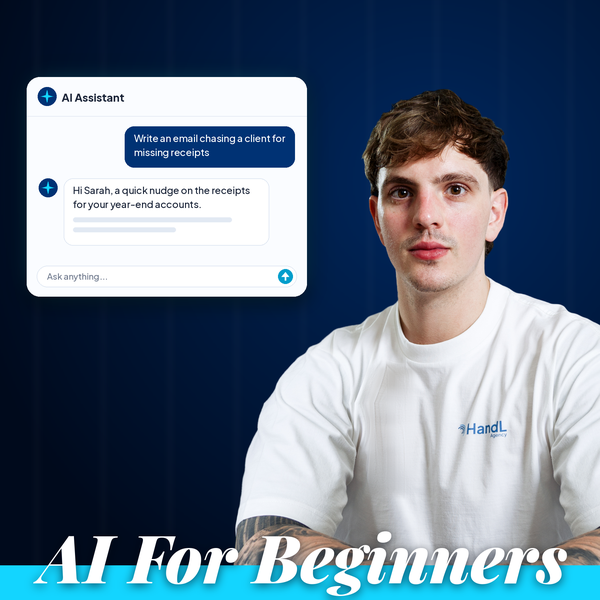









In 45 minutes with Bailey and Luke, you’ll see where your brokerage is losing search visibility, what the insurance agencies outranking you are doing differently, and the two or three changes that would make the biggest difference to your search results in the next 90 days.
Whether the answer is local SEO, technical SEO, content or AI search, you’ll leave with a clearer picture of your SEO performance than you walked in with.
Jump on a call with Luke and Bailey today.
Not ready to book a call? Take the 3 minute AI scorecard first.
Or call us on 0117 457 6659, email contact@handlagency.com or fill in the contact form.
Six to twelve months for meaningful results, and anyone promising faster is selling you something. It usually arrives in an order. Local searches move first, often inside 60 days, because the map pack is the least competitive thing you’ll compete for. Service page rankings follow at three to six months. Authority from content and links compounds after that. You’ll see movement in Google Search Console long before you see it in the pipeline, which is why we report on enquiries rather than impressions.
On generic motor and home insurance terms, no. Any insurance SEO agency that tells you otherwise is taking your money. Those brands have spent years building their position on terms like “car insurance”, and the search results reflect it.
The question is worth reframing though. You don’t need to beat a comparison site on “car insurance”. You need to be the first result for the specific searches that describe the risks you’re good at placing, where the comparison sites either don’t compete or compete badly. Commercial lines, sector specialisms, non-standard risks, and anything that needs a conversation before a price. That’s a winnable fight, and those enquiries are worth considerably more per policy than the ones you’re losing.
You sign it off, we write it to the right standard, and the approval gets recorded.
Most of what sits on a broker’s website counts as a financial promotion, which means it’s regulated material rather than ordinary marketing. Not just adverts. Service pages, blog posts, even social posts, wherever the copy is pointing someone towards buying cover through you. It has to be fair, clear and not misleading, the claims on it have to stand up, and someone at the firm competent to judge it has to approve it before it goes live.
Plenty of insurance SEO agencies don’t know that rule exists and publish straight to a client’s website without a sign-off step. The broker owns that problem, not the agency.
So we build the review into the schedule instead of treating it as a bottleneck. Insurance content comes in batches with enough lead time for your compliance lead to read it properly, we keep the version history, and nothing goes live unapproved. It’s the only part of the process we can’t do without you, and it isn’t a limitation. It’s how it’s supposed to work.
You can, and it’s the fastest way to make sure the page never ranks.
Google treats insurance topics as YMYL content, which means it’s looking for evidence a real expert wrote it. Generic AI generated answers produce copy that reads plausibly and says nothing only a broker would know, and that’s exactly what the E-E-A-T assessment is designed to catch. Worse, AI answer engines pull their recommendations from firms that demonstrate genuine expertise, so thin content costs you twice.
AI tools have a place in the process. Research, outlines, first drafts, repurposing a page into YouTube video content or a LinkedIn post. What they can’t do is bring the experience of having placed the risk. Effective SEO for insurance brokers needs someone who has seen a claim go wrong to explain what a policy wording actually does, and then a compliance lead to sign it off.
Three layers, and we report on all of them.
Visibility first. Search engine rankings for your target insurance keywords, impressions and clicks in Google Search Console, and whether you’re appearing in local search results and Google AI Overviews. This moves earliest and it’s the leading indicator, not the point.
Then behaviour. Organic traffic growth in Google Analytics, which pages the website traffic lands on, and what it does next. Rising traffic that never contacts you means the initial search intent was wrong and the keyword targeting needs changing.
Then the only thing that matters. Quote requests, enquiries, and which of them turned into business. Every SEO campaign we run has that wired up before any content goes live, so SEO success is measured in policies rather than page views. If an agency can’t tell you which search terms produced an enquiry last quarter, they aren’t measuring SEO performance at all.
Yes, and it’s usually the fastest win available. Even brokerages trading nationally get most enquiries from a radius, because a business owner handing over their risk wants to know they could sit across a table from you when something goes wrong.
Local SEO strategies put your brokerage in the map pack for local searches, where national firms rarely compete. Claim and complete your Google Business Profile, keep your NAP data consistent everywhere it appears, and ask for reviews at renewal instead of hoping for them. Insurance agencies are unusually bad at review generation, which means the local search results in a lot of towns are winnable on that alone.
Both, but not equally. Generic personal lines and auto insurance terms belong to the comparison sites and the direct insurers, and there’s no strategy that changes that.
Non-standard personal lines is a different picture. Classic and modified vehicles, high net worth home, unoccupied and listed property, drivers with convictions, anything a comparison site declines or prices badly. Those searches carry genuine volume, far less competition, and a buyer who has usually already been turned away somewhere else. If you write that business, personal lines SEO works well. If you’re chasing standard motor, it won’t.
Yes, though how far we can go depends on what the network lets you change.
The work needs four things: the ability to edit page titles and meta descriptions, add new pages, publish content, and make technical amendments. If you have access to all four, there’s nothing about a network template that stops us running a full strategy.
Where it gets restricted is usually the technical side, because a shared template means shared problems no single broker can fix alone. If that’s the case we’ll work with the network directly to get changes made, and get on with the content and local search work in the meantime. That still moves the needle, and it gives you a clear picture of what the template is costing you in rankings and enquiries if you ever want to make the case for your own website.
Either way, the first thing we do is find out exactly what access you have. That answer shapes the whole strategy.
By choosing what you rank for. A brokerage that ranks for “cheap business insurance” gets price shoppers. A brokerage that ranks for “professional indemnity insurance for surveyors” gets insurance clients who want the cover right. Same keyword research process, different target audience.
We map every term to who’s typing it and why, build your service pages around the searches your right clients run, and leave the rest alone. You’ll get fewer enquiries. More of them will be worth quoting.
Every core class, yes. One page trying to cover professional indemnity, employers’ liability, fleet and cyber will rank for none of them, because the search engines can’t tell what it’s about and neither can the reader.
Each class needs its own page, built around the searches for that cover and tied together with internal links so authority flows between them. Sector pages earn their keep too, because a haulier searching “insurance broker for hauliers” converts better than the same person searching “business insurance”. Specialist classes are usually where the commission is and where the competition is thinnest, so those pages pay back fastest.
Google gives ten results and lets the reader choose. AI search engines give three names and a reason. The work overlaps but it isn’t the same. Traditional SEO gets you into the results. Getting named in Google AI Overviews or ChatGPT needs content structured so a machine can lift a clean answer out of it, schema markup so it knows what your brokerage is and what you place, and enough corroboration elsewhere that it trusts the answer. Do both. They feed each other.
Yes, and it’s the single biggest structural mistake we see on broker websites.
Insurance brokers should create dedicated product pages for each line of coverage, because one page trying to cover professional indemnity, employers’ liability, fleet and cyber will rank for none of them. The search engines can’t work out what the page is about, so it competes for everything and wins nothing. Split it into four and each one has a clear job.
The same logic applies further down. A page for “commercial insurance” is too broad to attract qualified leads. A page for “professional indemnity insurance for architects” pulls in a prospect who already knows what they need. Every line of coverage gets its own page, built around the relevant keywords for that cover, then sector pages layered on top for the trades and professions your brokerage writes most.
Internal linking ties it together, so authority flows from the broad pages down to the specialist ones. Most insurance websites have five or six pages and wonder why the SEO efforts aren’t landing. A brokerage placing fifteen classes of business should be running fifteen pages at minimum, and the specialist ones usually rank fastest because that’s where the competition thins out.
It’s slower to build than one page of copy. It’s also the difference between an SEO strategy that produces enquiries and one that produces impressions.
Sometimes, and we’ll tell you before you sign anything rather than after.
A mobile-responsive website is necessary for insurance brokers now, not optional. Most of the traffic arriving at your site is on a phone, and a business owner comparing insurance services on a mobile will leave a site that loads slowly or asks them to pinch and zoom to read a policy summary. Google sees that behaviour and ranks the site accordingly.
The other common blockers are a site nobody can add pages to, a template that won’t let you edit page titles, and a contact form that quietly stopped sending emails eighteen months ago. Any one of those caps what an SEO strategy can achieve regardless of how good the content is.
So the first thing we do is audit what’s there. If the site is fundamentally sound, we work with it and put the budget into content and local search. If it isn’t, we say so and scope what needs fixing first. Sometimes that’s a handful of technical repairs. Occasionally it’s a rebuild, and we’d rather have that conversation at the start than take six months of retainer knowing the ceiling is low.
Either way you get a straight answer about what your website can and can’t support before the marketing strategy gets built around it.