

Web design for insurance brokers is a different job from designing for anyone else. Someone lands on your site cold and has to decide, in about eight seconds, whether to trust you with their fleet, their factory or their home.
We build trustworthy insurance websites that get you new customers passively.

What’s going wrong with your insurance website?

“It looks fine to us, so why does nobody enquire through it?”
Websites for insurance brokers must establish credibility immediately, because the visitor is deciding whether you are a real firm worth trusting inside a few seconds.
Trust signals such as testimonials and certifications are critical for insurance broker credibility, and most broker sites bury them or leave them off entirely. There’s no proof anyone has used you, no accreditations visible, no named people. Nowhere in the insurance industry does a stranger hand over a risk to a firm they can’t verify, so they close your tab and open one they can.
“Potential customers land on the site and go straight back to Google.”
They arrive with a question. Can you cover a business like mine, and what would it cost. If neither answer is obvious within a page or two, they leave.
Two things usually cause it. The navigation makes them hunt, when a well-organised navigation structure is what keeps people moving through the site. And listing your insurance services is not the same as explaining them, so the page fills with policy language nobody outside the trade uses. Simplifying complex insurance concepts improves user experience on broker websites, and using plain language helps people understand what they’d actually be buying.
Fast loading times matter too, because a visitor who waits is a visitor who reconsiders.
“It works on a laptop and falls apart on a phone.”
Between 70 and 80% of website traffic comes from mobile devices, so the phone version is the website that most of your potential customers will see.
Yet only 48% of mobile websites pass Core Web Vitals standards. If yours is among the rest, you’re losing people before the page finishes drawing, and you’re losing search engine rankings at the same time, because Google is measuring the same experience your visitors are.
“Every small change takes three weeks and another invoice.”
Somebody built the site, handed over a login that doesn’t do much, and disappeared. Now a new commercial line, a price change or a compliance amendment means an email, a wait and a bill.
That’s how sites go stale. Regular updates help maintain compliance with industry regulations, and a site nobody can edit doesn’t get updated. Two years later the website redesign conversation starts again from scratch.
The websites we’ve built for our clients.
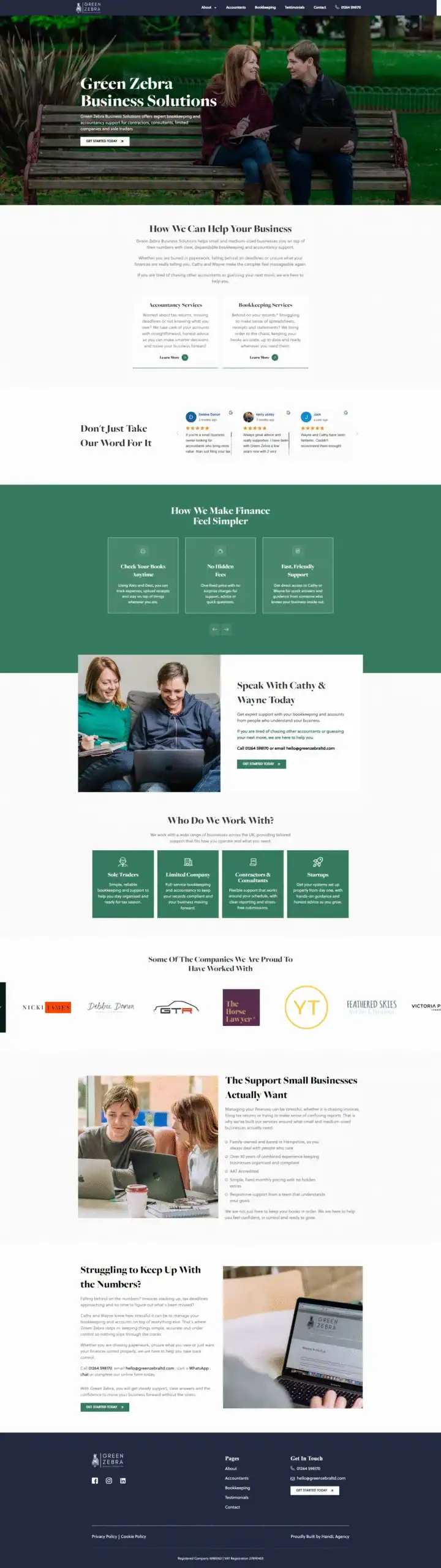
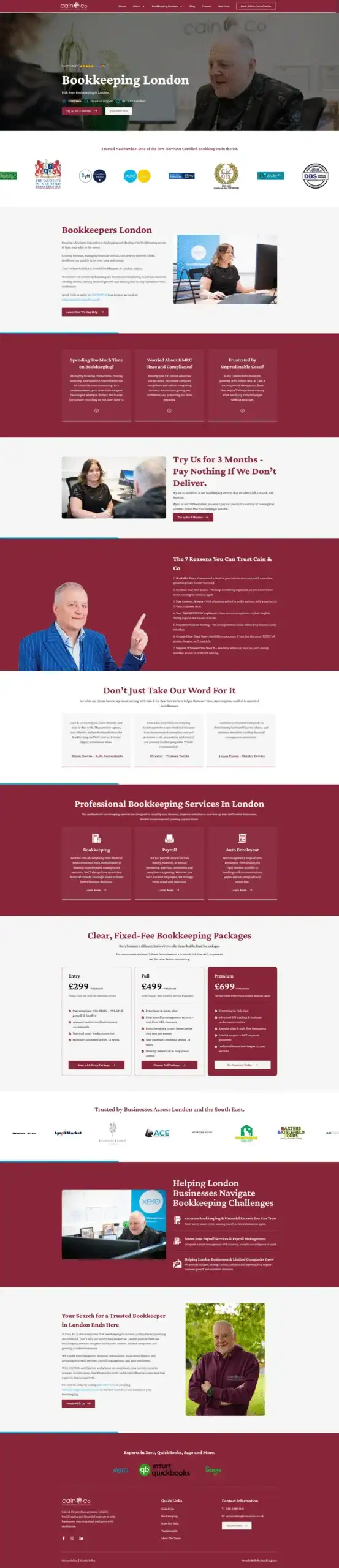
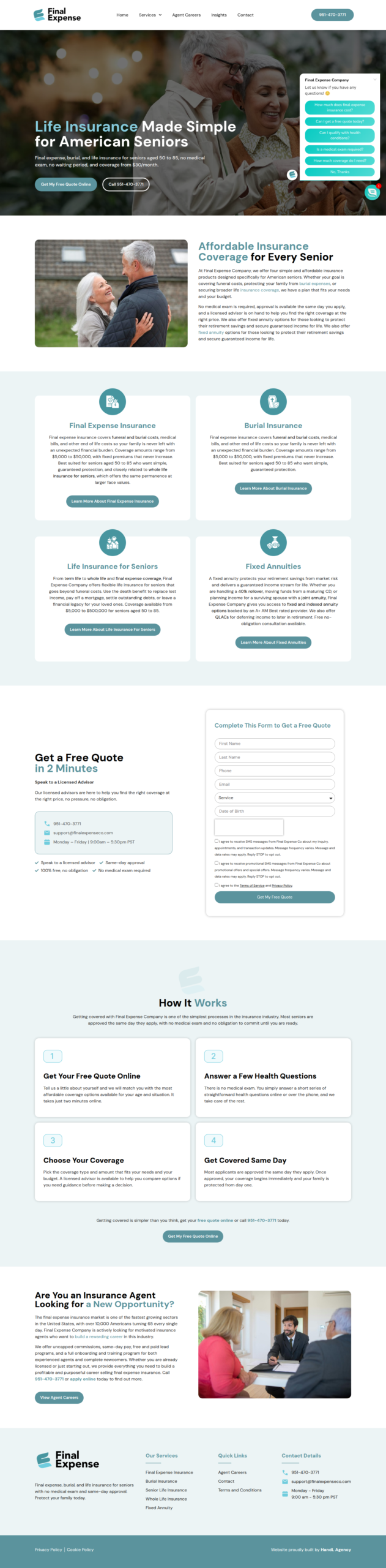
What finance firms say about us.
Why website design decides how many enquiries you get.
54% of consumers visit a business’s website after reading positive reviews.
Your reviews send people to your site. What happens next is entirely down to the site and a good review followed by a poor page wastes the review.
47% of consumers won’t use a business with fewer than 20 reviews, and 31% only use businesses rated 4.5 stars or higher.
Reputation and website are one system, not two. 80% of consumers prefer businesses that reply to all reviews, so the review process and the site have to be built to work together.
SEO-optimised websites can improve lead generation by 2.64%.
On a brokerage’s annual enquiry volume, a design built for search rather than retrofitted for it pays for itself well before the year is out.
Feeling frustrated that you’re not doing more with AI yet?

Even though you know it could save your team hours.
Answer 15 questions to see how well your firm is really using AI and marketing, and what to fix first.
It takes three minutes; you get immediate recommendations plus free assets matched to your results.
Hear from the firms we work with.
Cathy Vass
Green Zebra Business Solutions
Paul Cain
Cain & Co Bookkeeping Services
David Sarver
Final Expense Co
Effective insurance website design that gives visitors a reason to enquire.
Effective web design for insurance brokers involves balancing trust, clarity and ease of use. Miss one and the other two stop mattering.

Nobody reads an insurance page top to bottom. They scan for the one thing that applies to them, and either find it or leave.
So we design around that. The best insurance websites follow the three-click rule, which means any page a visitor wants sits within three clicks of where they landed. Clear navigation enhances user experience and reduces frustration, and a user friendly layout increases conversion rates on insurance websites because people who aren’t lost are people who enquire.
Prominent calls to action drive engagement, and short forms improve lead capture and decrease abandonment rates. We ask for the fewest fields that let you quote, not every field your insurance systems might one day want.
A mobile-first approach is essential for modern insurance websites, so we build the phone experience first and scale up rather than shrinking a desktop layout and hoping.
Responsive design ensures websites adapt to all screen sizes, from an old handset on a building site to a widescreen monitor in an office. Responsive insurance websites matter more in this sector than most, because customer expectations have moved: people check cover on the way somewhere rather than sitting down to research it.
Mobile optimisation improves user experience and search rankings together. Fast-loading websites enhance user experience and SEO performance, so page weight, image handling and Core Web Vitals get attention before anything decorative does. A mobile-optimised website improves user experience and SEO rankings at once, which makes it the highest-return thing on this page.
Incorporating interactive tools can engage users and enhance their experience on insurance websites, and they do something a static page can’t. They give somebody a reason to stay.
Interactive tools like quote calculators improve user engagement and tell you what the visitor needs before the first call. Client portals improve service accessibility for existing insurance clients, which cuts the volume of “can you send me my schedule again” emails your team handles every week.
The right tools depend on what you place, and they’re where a custom website separates itself from anything a template can do.
Insurance websites must comply with strict regulatory standards, and retrofitting compliance onto a finished site is more expensive than designing with it in mind.
We work to your compliance frameworks from the start. Insurance websites should implement SSL certificates for data security, and SSL certificates encrypt data and protect user information a visitor is handing over before they’ve met you. Compliance with accessibility standards is crucial for insurance broker websites, and it’s the regulatory requirement most design agencies forget entirely.
Your disclosures, permissions wording and complaints route get built into the structure rather than added to a footer at the end.
Different lines need different treatment, which is where generic insurance web design falls short.
Life insurance websites should simplify complex policy information, and life insurance sites benefit from interactive tools like calculators that let somebody model a sum assured themselves. Health insurance sites must use infographics to clarify terms, and health insurance websites should include robust FAQ sections, because the questions are predictable and answering them on the page saves your team repeating themselves.
Auto insurance websites need a quote generation process with the friction taken out of it. Commercial lines need depth per sector rather than one page covering everything.
We build the pages for what you actually place, so the site reflects your insurance expertise rather than the generic set every other insurance agency has.
Insurance websites with strong SEO strategies see higher visibility, and the cheapest time to build for search is while the site is being built.
Site structure, URL hierarchy, internal linking, page speed and schema all get set correctly at build stage. Content creation runs alongside the design instead of being poured into finished templates, so every page has a search purpose before it has a look.
Content marketing can demonstrate expertise and improve visibility for insurance brokers, so the site launches with somewhere for that content to live and a structure that lets it rank. Search visibility earned this way holds, rather than needing an agency to prop it up every month.
A launch is a starting point. Agencies provide ongoing maintenance to ensure website security, and ongoing support includes security monitoring and backups so a plugin update or an attempted breach doesn’t take you offline during renewal week.
Performance monitoring is essential for optimising website effectiveness. Analytics should be used for continuous improvement of insurance website performance, so we set up Google Analytics and Search Console properly at launch and check them monthly. Agencies offer analytics to track website performance post-launch, but the valuable insights come from acting on them rather than emailing a dashboard.
You also get technical troubleshooting from people who know the build, so a broken form on a Tuesday morning is a message rather than a project.
Results we have achieved for companies like yours.

SEO
Cain & Co Bookkeeping Services
£30,948 a year in new business & rank 1 on Google for London’s toughest bookkeeping terms.

Website Design
Final Expense Co
We took a brand-new US insurance company from no website to page one of Google in six weeks.

SEO
Green Zebra Business Solutions
An accounting firm nowhere on Google. Under a year later, number one in Hampshire.
How our insurance agency website design process works.
Our insurance website design process is a structured process, so you always know what’s happening and what’s needed from you. Custom insurance websites typically take 3 to 6 months to build.
Discovery, target audience and business goals.
We start with who you want more of and what the site has to achieve commercially. Commercial lines or personal. Independent agencies serving a county or a national specialism. The design process is shaped by the business growth you’re aiming for rather than by whatever looked good on the last project.
Brand identity, structure and design.
Your brand identity gets applied consistently across every template, then the sitemap and wireframes get signed off before a single visual is polished. This is where user education comes in: deciding which complex insurance processes need explaining on the page and which need an interactive tool to explain them properly.
Website development and integrations.
Integration capabilities matter more in this sector than most, because your website has to talk to the systems your team already lives in. Quote engines, CRM, portals and your AMS. Insurance solutions that only work when somebody rekeys the data aren’t worth the licence. The same thinking drives our AI automation for insurance brokers.
Launch, training and handover.
You get a site your team can edit, training on how to do it, and documentation. Then the ongoing support arrangement takes over, so the website’s performance keeps improving as your business grows rather than degrading the moment we finish.
Three reasons insurance businesses choose HandL Agency.

We work with finance firms and nothing else, so you don’t spend the first call explaining what a renewal pack is or why commercial and personal lines need different journeys. Industry expertise means the site reflects how insurance agents actually sell, not how a design studio imagines it works.
Template-based solutions look cheap because they are. Custom website design costs more upfront and stops costing you the moment you want to change something. It also means your site doesn’t look identical to the other insurance companies using the same theme.
Most projects fail in the gap between the people who designed it and the people who built it. Ours don’t have that gap. Design, development, search engine optimisation, content and integrations run through one team, which is why exceptional insurance website design is a process question rather than a talent question, and why the finished site has seamless functionality.
We treat clients as partners, not contracts.
Quarterly catch-ups, dinners, beers, pool nights, coffees, darts, football, rugby and cricket.
We put real time into the firms we work with because the work is better when the relationship is. Client satisfaction here comes from the site still earning its keep in year three, not from a nice launch day.

Honestly? You don’t even need to work with us to get value from us.
Free website reviews, wireframe templates, Core Web Vitals guides, conversion checklists, SEO frameworks and content planning resources you can download today.
Built for insurance brokers, accountants, bookkeepers and financial advisors who want to improve their digital presence before bringing anyone in.

How to Run a £2,500 AI Audit Yourself

Never Run Out of LinkedIn Posts Again
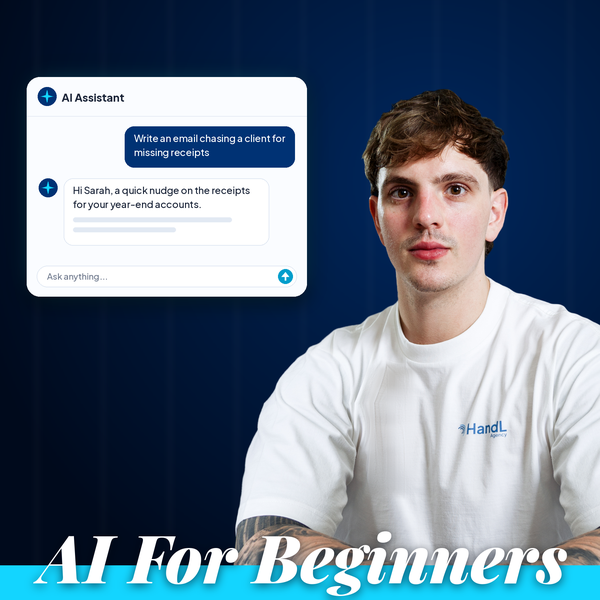
Your First 7 AI Prompts: Client Emails, Explainers and Proposals

Every Lead Researched, 2 Minutes After They Enquire

Client Meeting Notes, Written and Filed Automatically

The Client Email Prompt Pack

The Branded Presentation Prompt Pack

The SOP Prompt Pack

The Reddit Comment Prompt Pack

The Finance SEO Prompt Pack

25 AI Prompts Your Firm Will Actually Use

Build a Website Page That Ranks and Wins Customers
Ready for a website that actually brings you business?
In 45 minutes with Bailey and Luke, you’ll see where your current site is losing enquiries, what the brokerages ranking above you are doing differently, and whether a redesign or a rebuild is the right call.
You’ll leave with a clear view of the key elements to fix first, whether you work with us or not.
Not ready to book a call? Take the 3 minute AI scorecard first.
Or call us on 0117 457 6659, email contact@handlagency.com or fill in the contact form.

Insurance web design: the questions we get asked most.
Custom insurance websites typically take 3 to 6 months. Discovery and structure take four to six weeks, design and build take the bulk of it, and testing and compliance review take the last few weeks. Anything promised in three weeks is a template with your logo on it.
Depends what’s underneath. If the structure, speed and mobile experience are sound, targeted work on the pages that convert will do more for less. If the site fails Core Web Vitals, can’t be edited and was built for desktop, you’ll spend more patching it than replacing it. We tell you which before quoting.
It removes what’s holding them back. Mobile optimisation is crucial for improving search engine rankings, and site speed, structure and schema all feed search visibility. Design alone won’t rank you for competitive terms, but a well designed insurance website gives content and link work something solid to sit on.
Less than you’d expect. A kickoff session on your target audience and business goals, sign-off on structure and design at two points, compliance review before launch, and someone who can answer questions about how you place business. We handle content creation unless you’d rather write it.
Usually yes. Quote engines, CRM, client portals and most AMS platforms have integration capabilities we can work with. We check what’s possible during discovery rather than promising it and finding out later.
Through the parts most sites get wrong. Short forms rather than long ones. Interactive tools that give somebody a reason to engage. Clear calls to action on every page. Content built around what insurance buyers search for. Together they turn traffic that already exists into enquiries, which is usually a faster win than chasing more traffic.
Yes, and they work better when the same team built the site. A site designed with search and campaign traffic in mind converts better than one that gets handed to a marketing agency afterwards.
Ongoing support covering security monitoring, backups, updates, technical troubleshooting and monthly reporting from Google Analytics and Search Console. Regular updates keep you aligned with regulatory requirements, and performance monitoring means changes get made on evidence rather than opinion.
No. Independent agents and small independent agencies often see the biggest change, because they’re competing against other insurance companies with far bigger budgets, and effective insurance web design closes that gap faster than anything else available to them.